Wednesday, 26 August 2026 Stay informed. No noise.

Zurich releases report addressing climate risks

Zurich Insurance Group (Zurich) releases the “Climate Risks: Strategies for Building Resilience in a More Volatile World,” report emphasising the urgent need for coordinated action against the rising threats posed by extreme weather and natural catastrophes. The report outlines the increasing costs of these events, highlights the role of insurance, and offers recommendations for policymakers to build resilient societies and economies.

Extreme weather events such as hurricanes, floods and wildfires caused about USD2 trillion in economic losses over the past decade according to the International Chamber of Commerce. The frequency and intensity of these events are increasing, potentially exacerbated by long-term climate shifts like temperature variations, rising sea levels and changes in precipitation patterns.

“The insurance industry is uniquely positioned to help strengthen resilience to physical climate risks,” said Alison Martin, CEO EMEA and Bank Distribution. “However, addressing the escalating costs of extreme weather and natural catastrophes requires collective and immediate action. Our paper provides a roadmap for how governments, insurers and communities can collaborate to meet the growing challenges posed by extreme weather and natural catastrophes.”

Insurance is crucial in protecting households, businesses and governments, helping them recover financially from the effects of natural catastrophes. However, insurance coverage is not keeping up with growing losses, leading to more underinsured or uninsured households and businesses.

Zurich advocates for a new approach that focuses on risk reduction and extending insurance coverage to protect communities and businesses. The insurance industry can provide risk management insights and capabilities to strengthen resilience to physical climate risks. By de-risking capital flows, the industry can also help unlock the necessary finance to build the infrastructure required to deliver that resilience, enhancing the protection provided by insurance.

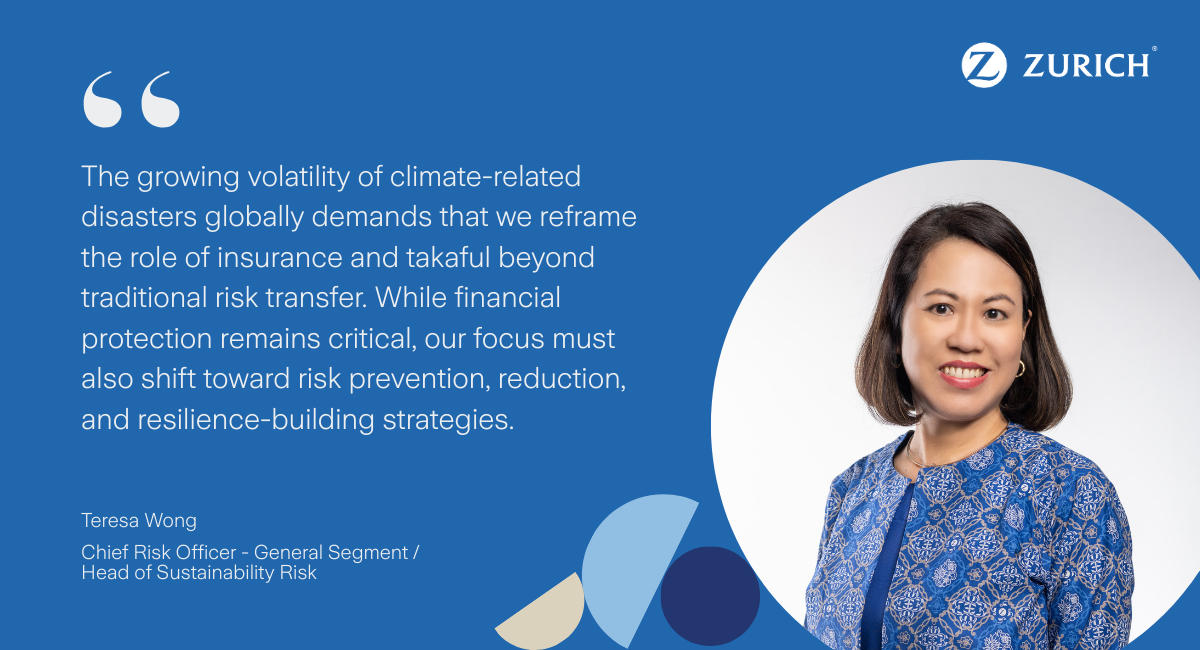
Teresa Wong, Chief Risk Officer – General Segment / Head of Sustainability Risk at Zurich Malaysia, emphasises “The growing volatility of climate-related disasters globally demands that we reframe the role of insurance and takaful beyond traditional risk transfer. While financial protection remains critical, our focus must also shift towards risk prevention, reduction, and resilience-building strategies. This is particularly relevant in Malaysia, where our Climate Resilience Survey highlights that more than half of respondents feel unprepared, with many citing financial constraints as a key barrier to readiness. As insurers, we must harness our risk expertise to support customers and communities not just in recovery, but in building long-term adaptive capacity. Now more than ever, strengthening climate resilience is fundamental to ensuring protection remains accessible and sustainable in the face of escalating risks.”

However, the insurance industry cannot tackle this challenge alone. A coordinated effort between the private and public sectors is needed. This paper makes three recommendations for policymakers:

  1. Invest in risk prevention and reduction: Governments should make formal commitments to strengthen climate resilience through robust strategies and the implementation of building codes and urban planning regulations. Measures include building climate resilience into national planning, establishing national centres of competence, and making more effective use of technology, data analytics and scientific research.
  2. Enhance insurance accessibility and affordability through supportive policy frameworks: Governments can raise awareness of extreme weather risks and offer incentives for households and businesses to obtain adequate insurance. This can be achieved by establishing a regulatory environment that sustains market capacity, attracts new entrants, and fosters competition and innovation to broaden coverage options for consumers.
  3. Develop public-private risk-sharing solutions to raise finance climate resilience: Innovative solutions such as blended finance and (re)insurance pools can help share resources and distribute risks, improving affordability and preventing the development of “insurance deserts.” Public-private partnerships (PPPs) can enhance insurance accessibility and affordability, especially in higher-risk areas.

Zurich remains committed to working with stakeholders worldwide to build a more resilient future, ensuring that communities and economies can thrive despite the growing challenges posed by climate risks.

For more information on Zurich Malaysia’s insurance and takaful plans, please visit zurich.com.my.


 

Microsoft’s 2025 Work Trend Index: Malaysian workforce and leadership align on intelligent agent integration

New data released from Microsoft’s 2025 Work Trend Index reveals how the rise of AI-driven intelligent agents is redefining the traditional organisational chart and transforming knowledge work across every job level – from the C-suite to frontline workers.

The latest data exposes a widening capacity gap, with 61% of Malaysian leaders saying productivity must increase, but 83% of the country’s workforce – both employees and leaders – saying they lack enough time or energy to do their work. This is supported by Microsoft 365 telemetry data, which shows that on average, employees are interrupted every two minutes by meetings, emails, or pings.

However, with the rise of agents that can reason, plan, and act as digital labour, roles and organisations will reshape to scale capacity as needed. Already, 89% of Malaysian leaders say this is a pivotal year to rethink core strategies and operations – and 86% say they’re confident they’ll use agents as digital team members to expand workforce capacity in the next 12 to 18 months – both notably above global averages.

“Malaysia is stepping up as a regional leader in AI transformation – and the latest Work Trend Index findings affirm that,” said Laurence Si, Managing Director of Microsoft Malaysia. “With 86% of business leaders confident in using AI agents to expand workforce capacity and more than half already automating entire workstreams, Malaysia is proving how organisations can turn ambition into action and scale impact through intelligent agents.”

Reimagining teams for higher impact

As AI continues to democratize access to expertise, the data shows an evolution from rigid and hierarchical organisational charts to more fluid “Work Charts”, where teams are formed around outcomes rather than siloed functions like marketing or finance – mirroring a model typically used on movie production sets today.

With agents acting as research assistants, analysts, or creative partners, companies can deploy lean, high-impact teams on demand. In fact, more than half of Malaysian leaders (51%) are already using agents to fully automate workstreams or business processes – above the global average of 46%.

But to maximise impact, organisations need to achieve the right ratio of human and digital labour for specific tasks. The report highlights that employees in Malaysia turn to AI to access capabilities humans can’t provide: 24/7 availability (44%), machine driven speed and quality (35%), and unlimited ideas on demand (31%).

The rise of the Frontier Firm

The report points to the emergence of Frontier Firms – a new type of organisation powered by hybrid teams of humans and agents – as proving what’s possible by scaling faster, moving with greater agility, and creating value in new ways.

Workers and leaders at these Frontier Firms are more than twice as likely to say their companies are thriving and that they can take on additional work. They are also more likely to report having opportunities to do meaningful work. In Malaysia, Frontier Firm workers report notably high levels of opportunity for meaningful work (92%) and ability to take on more work (58%) – far above the APAC average (77% and 21%, respectively).

Within the next two to five years, every organization is expected to begin the journey toward becoming a Frontier Firm. 44% of Malaysian leaders say expanding capacity with digital labour is a top priority in the next 12-18 months, second only to upskilling (48%). Beyond agents, 84% of Malaysian leaders also say their company is considering adding new AI-focused roles to prepare for the future, such as AI agent specialists, AI trainers, and AI workforce managers.

AI skills now a top priority

Both leaders and employees in Malaysia are rapidly building familiarity with AI agents. Nonetheless, countering last year’s findings, which showed employees leading in AI adoption, this year business leaders are ahead of the curve. 68% of Malaysian leaders report being highly familiar with AI agents, compared to just 39% of employees.

To bridge this gap, 59% of Malaysian managers expect AI training or upskilling to become a core responsibility for their teams in the next five years. Within the same period, Malaysian leaders have greater expectations than global peers that their team’s scope will expand to include redesigning business processes with AI (40%), building multi-agent systems to automate complex tasks (46%), as well as training and managing agents (48% and 44%, respectively).

Looking ahead

The findings suggest Malaysia’s early adoption of AI agents could translate into significant competitive advantages over the next decade. From the boardroom to the front line, success will increasingly depend on thinking like the CEO of an agent-powered startup – skillfully delegating to and managing teams of specialized AI agents.

Organisations embracing the Frontier Firm model are positioned to outperform traditional competitors in innovation speed, operational efficiency, and talent attraction. “AI is more than a shift in tools. It’s a strategic transformation that will be woven into the modern workplace,” adds Laurence Si. “Malaysia is emerging as a model for how AI-powered organizations can transform productivity, empower talent, and lead in the digital economy.”

Read the 2025 Work Trend Index on Worklab or visit the Microsoft blog and Microsoft 365 Blog to learn more. For all WTI blogs, videos, and assets, please visit our microsite.

UOB Malaysia reports record high NPBT of RM2.2 billion in 2024

UOB Malaysia reported a record net profit before tax (NPBT) of RM2.2 billion and total operating income of RM4.7 billion for the financial year ended 2024. The Bank’s net profit before tax increased by 15.9 per cent (2023: RM1.9 billion), while operating income grew by 2.3 per cent (2023: RM4.6 billion). The Bank’s financial performance for 2024 was disclosed in its Annual Report 2024.

The increase in operating income was backed by steady growth across all income streams, including net interest income, Islamic banking, net foreign exchange gains and fees and commissions. Meanwhile, total expenses decreased by RM22 million due to disciplined cost management, while total allowances for expected credit losses declined significantly by 52.1 per cent to RM159 million with improved asset quality and lower provisions for both impaired and non-impaired assets.

In 2024, UOB Malaysia’s gross loans, advances and financing grew by 2.1 per cent to RM109.5 billion (2023: RM107.2 billion), supported by steady growth across both its Wholesale and Retail segments. As the Bank continued to strengthen its balance sheet, it remained focus on growing and maintaining quality deposits, resulting in higher current account-savings account (CASA) ratio of more than 44%.

Ms Ng Wei Wei, Chief Executive Officer, UOB Malaysia, said, “We are pleased to report another year of strong financial performance, with record net profit before tax of RM2.2 billion. This achievement reflects the strength of our diversified business model, supported by prudent risk management, disciplined cost control and solid performance across our core businesses. Our Wholesale Banking business has made significant strides in advancing the Bank’s sustainability and connectivity agenda, delivering double-digit growth in both sustainable financing and trade loans. On the back of good trade flows, our Global Market income also grew strongly, as we assisted our clients in managing interest rate risks in a volatile environment. Additionally, our expanded retail franchise continues to deliver strong momentum, particularly in credit card and wealth management business, following the successful integration of the Citigroup’s Consumer Banking business.”

The Bank’s solid credit standing and stable outlook were also reaffirmed by its AAA rating by RAM Holdings Berhad (RAM Group), a distinction it has maintained since 2012. Its capital position remained strong, with a Common Equity Tier 1 ratio of 16.0 per cent and a Capital Adequacy Ratio of 19.4 per cent, well above regulatory requirements, providing a sufficient buffer to support future growth.

UOB Malaysia leverages its regional network and expertise, supported by 11 Foreign Direct Investment teams across Asia, to connect businesses to opportunities and drive cross-border investments. Aligned with national economic strategies, it supports key growth sectors – from Penang’s semiconductor industry to the Johor-Singapore Special Economic Zone and Sarawak’s renewable energy, contributing to Malaysia’s diversified economic growth and UOB Group’s goal of becoming a leading cross-border trade bank by 2026.

In the sustainability space, UOB Malaysia continues to actively champion sustainable financing through our comprehensive framework, validated by credible international second-party opinion providers. As a testament to its commitment to ESG within its operations, UOB Malaysia’s head office, UOB Plaza 1 Kuala Lumpur, was awarded the most energy efficient building at the National Energy Award 2024 and ASEAN Energy Award 2024.

Recognised for its long-term stability, technological innovation and excellence in service, UOB Malaysia was named Malaysia’s Best Bank at the 32nd annual World’s Best Bank Awards 2025 – Asia Pacific by Global Finance in March 2025. The Bank was also recognised as the Best Bank and Best Sustainable Bank in Malaysia for the International Categories (2025) by FinanceAsia.

UOB Malaysia’s Annual Report 2024 is available at uob.my/stakeholders/annual/annual.page.

Asia Vision Capital’s new Shariah fund connects investors to Johor’s investment opportunity

Asia Vision Capital Sdn. Bhd. (AVC), a licensed Venture Capital Company registered and regulated by the Securities Commission Malaysia (SC), has launched QJBCCI PLT, a Shariah-compliant Real Estate Fund offering accredited investors structured access to Quayside JBCC. It is an iconic mixed-use development located within the Johor-Singapore Special Economic Zone (JS-SEZ), one of Southeast Asia’s most dynamic cross-border corridors.

QJBCCI PLT complements AVC’s conventional real estate fund, QJBCCA PLT, which was launched in January 2025. Both funds operate under a regulated framework where the funds are lodged with SC, with TMF Group as the trustee and Tawafuq Consultancy serving as the Shariah adviser for the Islamic tranche.
These funds provide accredited investors with the opportunity to participate in the development of Quayside JBCC through Redeemable Convertible Preference Shares, standing benefits from quarterly dividend distributions and redemption options after a five-year lock-in period. Backed by institutional-grade governance and oversight, the fund is designed for investors seeking exposure to real estate income streams across hospitality, serviced residences, parking, retail, rooftop restaurants and the development’s prominent LED advertising display.

“JS-SEZ and Rapid Transit System represent one of the region’s most exciting growth opportunities, powered by cross-border connectivity and rising demand for integrated urban destinations. Through our funds, we are pleased to offer accredited investors a structured and professionally managed pathway to participate in this option. This initiative reflects our commitment to unlocking long-term value through disciplined investment, Shariah governance and institutional-grade oversight,” said Ian Khor, Chief Investment Officer of Asia Vision Capital Sdn. Bhd.

AVC targets to raise up to RM 300 million as the initial commitment goal for this development project. To enhance investor experience, AVC plans to launch a dedicated mobile platform by late 2025, offering fund performance updates of its portfolios through web and mobile-optimised dashboards.

As part of its long-term strategy, AVC is also exploring the potential conversion of this mixed-used hospitality development into a publicly listed Real Estate Investment Trust (REIT) by 2032, broadening liquidity options and expanding investor access through public markets.

SC alerts public on impersonation scam involving fake guarantee deposits

The Securities Commission Malaysia (SC) cautions the public on an impersonation scam demanding payment under the guise of the SC.

The scam involves the perpetrators falsely claiming that individuals are “under investigation” by the SC for market offences such as insider trading and market manipulation.

Victims will then be pressured to pay a “guarantee deposit” — purportedly up to RM500,000 — to avoid alleged legal action, including arrest or prosecution.

The modus operandi of this scam has the characteristics of a Macau Scam, where the SC’s name has been misused to deceive victims into making payments.

As a regulatory body, the SC does not endorse any investment schemes, solicit monies from the public or demand deposits in any form for regulatory investigations.

The SC would like to urge the public to be cautious and verify any investment offers through the SC’s Investment Checker at www.sc.com.my/investment-checker. If you receive any requests for payment claiming to be from the SC or its staff, please contact the SC’s Consumer and Investor Office at aduan@seccom.com.my or call 03 – 6204 8999 to verify or to report it.

AFFIN launches “AFFIN 50 Years, 50 Prizes” Golden Jubilee campaign

AFFIN Group (“AFFIN” or “the Group”) celebrates its 50th anniversary with the launch of the “AFFIN 50 Years, 50 Prizes” Golden Jubilee Campaign, a year-long celebration rewarding customers with exclusive prizes, strengthening financial literacy and empowering Malaysians on their financial journey. Running from 1 March 2025 to 31 January 2026, this milestone campaign features 50 exclusive prizes, including a Grand Prize of RM1,000,000.

The “AFFIN 50 Years, 50 Prizes” Golden Jubilee Campaign invites customers to participate by performing eligible transactions, such as maintaining a minimum Month-End Balance (MEB) of RM5,000 in their AFFIN Current or Savings accounts. With every eligible transaction, customers earn entries for a chance to win.

Datuk Wan Razly Abdullah, President & Group Chief Executive Officer of AFFIN Group, said, “For 50 years, AFFIN has underscored its commitment to strengthening financial resilience, fostering economic growth, and delivering value to our customers wherever they are. The “AFFIN 50 Years, 50 Prizes” Golden Jubilee Campaign reflects our dedication to creating opportunities, driving progress, and empowering people with financial solutions that meet their evolving needs. As we look ahead, we remain focused on building a future-ready financial ecosystem that serves a wider community, aligned with the strategic pillars of our AFFIN Axelerate 2028 (AX28) Plan, which are Unrivalled Customer Service, Digital Leadership, and Responsible Banking With Impact.”

Beyond this flagship campaign, AFFIN is introducing a suite of initiatives tailored to meet the diverse financial needs of its customers, including Jalan-Jalan Raya AFFIN with Naelofar, the Porsche Cashback Campaign, the 1-for-1 Business Class offer with AFFIN Credit Card, and many more to be launched throughout the year. These initiatives are spearheaded by AFFIN’s key business divisions such as Deposit Business, Cards, Personal Financing, Mortgage, Auto Finance, Corporate Banking, Enterprise Banking and Wealth Management, in collaboration with Affin Hwang Investment Bank Berhad.

Learn more about how customers can benefit from the “AFFIN 50 Years, 50 Prizes” Golden Jubilee Campaign and start earning rewards today by visiting www.AffinAlways.com or following @Affinmy on social media.

Psychological traps in trading: Octa Broker’s perspective on avoiding costly mistakes

Even the most seasoned Contract for Difference (CFD) traders can fall into psychological traps—from chasing the hype to holding poor trades out of stubborn hope. Emotional biases can cloud judgment and lead even experienced traders to costly blunders. However, psychological resilience reduces the risk of a loss. Octa Broker, as part of its commitment to traders’ education, explores how emotion-driven decisions can quietly sabotage performance and offers practical guidance for staying focused and disciplined.

Psychological traps in CFD trading
Psychological traps consist of cognitive bias and emotional responses that negatively affect trading decisions. Cognitive bias compels traders from their strategy, potentially undermining their results. Notably, such traps are not exclusive to novices. Experienced traders are not immune to them either, especially when the market is volatile.

Emotions are powerful forces in trading. They can override rational analysis, prompting impulsive behaviour and unwise actions. Empirical findings in trading psychology indicate that investors frequently succumb to fear and greed, two emotions that can cloud their decision-making, potentially resulting in suboptimal profits or, more severely, significant losses.

Understanding six common psychological traps in CFD trading

  1. Fear of missing out (FOMO) drives traders to enter positions based on the anxiety of missing potential profits, often influenced by market hype or social media trends. This behaviour can lead to buying at peak prices without proper analysis. FOMO-driven traders may trade excessively, believing that more trades will increase their chances of hitting a winning opportunity.
  2. Revenge trading. After incurring losses, some traders attempt to recover quickly by making impulsive trades without adequate analysis. This often exacerbates losses and deviates from disciplined trading plans.
  3. Overtrading. A situation when traders try to always be active in the market and take positions without clear signals or strategies. This impatience can result in increased transaction costs and exposure to unnecessary risks.
  4. Gambler’s fallacy involves believing that a series of losses or gains will be naturally followed by the opposite outcome. Driven by the anticipation of an imminent reversal, traders may prematurely try to ‘pick a top’ during a bullish trend or ‘find a bottom’ in a bearish trend, often without sufficient evidence.
  5. Hope vs. strategy means holding onto losing positions, believing that the market will turn in their favour, despite evidence to the contrary. This can lead to significant losses as traders ignore stop-loss rules and objective analysis.
  6. Herd mentality implies mimicking the crowd by following others’ trades without analysis. Herd behaviour may form bubbles or exacerbate market downturns, leading traders to buy or sell too early.

Spotting the signs—when you’re not thinking straight
Be mindful of the sudden impulses to deviate from your trading plan, especially after winning or losing a lot. A shifted risk tolerance, such as opening positions that are unusually large, can be a sign of emotional trading. Other behavioural red flags include:

  • ignoring predetermined stop-loss levels
  • doubling down on losing positions
  •  frequently changing strategies without thorough evaluation.

Recognising these signs is the first step in regaining control and preventing emotion-driven decisions. Here are other tips to stay in control when trading:

  • Plan before trading. Develop a comprehensive trading plan that outlines entry and exit points, risk tolerance, position sizes, and adhere to it
  • Journal your trades to record your progress and monitor your emotional state. This helps identify patterns in behaviour and improve self-control.
  • Use stop-loss and take-profit orders to automate discipline, ensuring that decisions are executed as planned, even in volatile markets. Given the high-risk nature of CFDs, such controls are vital
  • Learn from mistakes. Regularly review your trading history to understand what worked and what didn’t. Reflecting on past errors fosters growth and helps in refining strategies
  • Step away when needed. Taking breaks from trading, especially after a series of losses or even wins, can provide perspective and prevent burnout. As Kar Yong Ang, a financial analyst at Octa Broker, advises: ‘Your worst trades often come when you feel most confident—or most afraid. Mastering trading psychology is what separates short-term reaction from long-term resilience.’

While technical ability and market knowledge form the foundation of trading, psychological discipline determines long-term success. Even a valid strategy can be undermined by emotional biases. By recognising common psychological traps and implementing measures to negate them, traders can improve their decisions and perform more consistently. Constant self-monitoring, deliberate discipline, and emotional mastery are key factors in navigating the complex psychological landscape of trading.

___

Disclaimer: This content is for general informational purposes only and does not constitute investment advice, a recommendation, or an offer to engage in any investment activity. It does not take into account your investment objectives, financial situation, or individual needs. Any action you take based on this content is at your sole discretion and risk. Octa and its affiliates accept no liability for any losses or consequences resulting from reliance on this material.
Trading involves risks and may not be suitable for all investors. Use your expertise wisely and evaluate all associated risks before making an investment decision. Past performance is not a reliable indicator of future results.
Availability of products and services may vary by jurisdiction. Please ensure compliance with your local laws before accessing them.

21% and growing: women-Led SMEs drive Malaysia’s economy forward

Women-owned businesses (defined as 51% owned, managed, and controlled by one or more women) are on the rise. Micro and small women entrepreneurs (MSWEs) make up 21% of small and medium enterprises (SMEs) in Malaysia.

This translates to approximately 241,767 women-led businesses (MSWEs) forming a vital part of the country’s economy, where SMEs account for 97.4% of all businesses.

While this is encouraging, there is still a notable gender gap as Malaysia aims to achieve a 60% female Labour Force Participation Rate (LFPR) by 2033. The latest female LFPR rose slightly to 56.3%, while the male LFPR stood at 82.9%, highlighting a notable gender gap despite the upward trend in women’s participation.

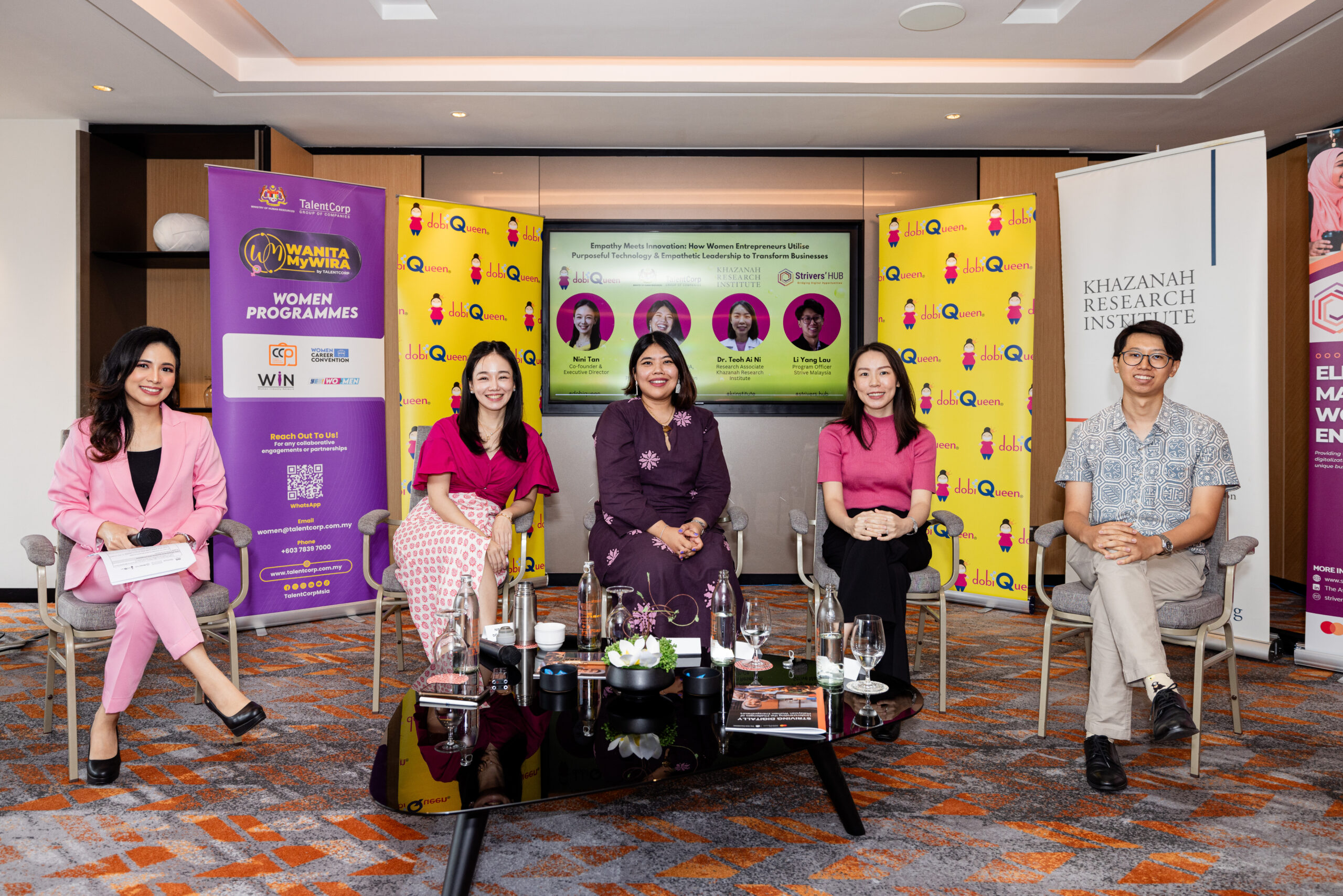
In an effort to bridge the gender gap and uplift MSWEs in Malaysia, leading self-service laundrette dobiQueen has recently organised an engaging panel discussion entitled, “Empathy Meets Innovation: How Women Entrepreneurs Utilise Purposeful Technology & Empathetic Leadership to Transform Businesses” with experts from the public and private sector, including TalentCorp’s Wanita MyWira, Khazanah Research Institute (KRI) and Strive Malaysia.

A study by Strive Malaysia has revealed that women entrepreneurs face three main challenges. Time poverty ranks tops with 97% citing juggling business, childcare, and household responsibilities as the biggest challenge. This is deeply rooted in gender norms, as women are often expected to be the primary caregivers in Malaysia’s social, cultural and religious contexts.

While over 80% of MSWEs acknowledge the potential advantages of digital literacy, and are able to search for information online via Facebook, Instagram, and TikTok, many use it for personal rather than for business purposes. There is a disconnect between digital literacy and entrepreneurial pursuits.

Lastly, only 50% of MSWEs expressed confidence in their financial knowledge and skill, limited to basic expenses of tracking income records, with many lacking understanding of broader financial concepts such as dynamic markets or funding applications. Of this, 78% expressed the need for more information from financial institutions in the areas of loan management, grants, and market information.

“This insightful report has since guided the development of targeted interventions to address the unique needs of women-owned and women-led businesses.

“We provide them with easy access to a free self-assessment tool, tailored skill-building training and microlearning resources, and mentorship opportunities, thus fostering a more enabling business ecosystem via Strivers’ Hub, a one-stop-shop digital platform designed to cater to the evolving needs of small businesses, particularly women entrepreneurs”, said Li Yang Lau, Program Officer at Strive Malaysia.

Women entrepreneurs are on the rise, with women-led businesses such as dobiQueen combining purposeful technology merged with its understanding of Malaysian households facing time poverty as they juggle work, childcare and household responsibilities.

Nini Tan, Co-founder and Executive Director of dobiQueen, shares, “As a small and medium-sized enterprise (SME), dobiQueen was founded 10 years ago with an empathetic mission to ease the burden of household chores.

“Women spend close to 63.6% more time daily on unpaid work than men, with women continuing to perform an additional 3.6 to 4 hours on average for unpaid chores after office hours, leading to the “double burden” or “second shift”.”

Both the private and public sectors have made many strides in uplifting women in society, with the Government allocating nearly RM470 million through the Budget 2025 to assist women-led entrepreneurs in Malaysia.

Natasha Alias, Head of Wanita MyWira at TalentCorp, said, “In 2024, the Ministry of Human Resources, through TalentCorp, introduced Wanita MyWira to address workforce gaps by enabling more women to participate fully in Malaysia’s economy. As the agency driving national talent strategies, we are committed to supporting women’s career journeys – from re-entry to leadership, and strengthening their long-term contribution to the workforce.”

“Wanita MyWira supports a broad spectrum of women – from students and returning professionals to entrepreneurs and industry leaders, through strategic advocacy, skills development, and employer engagement. The aim is to create real pathways into meaningful, sustainable employment.

“In 2025, we’re scaling our impact with targeted efforts. These include promoting tax incentives under the Career Comeback Programme (CCP), embedding diversity, equity and inclusion (DEI) practices within universities, and working with industry to expand job opportunities for women.

“With CCP tax exemptions and hiring incentives outlined in Budget 2024 and 2025, we’re driving outcomes that benefit both women and employers, and laying the groundwork for a more inclusive, resilient workforce.

TalentCorp is also developing the Gender Action Lab Report, which explores forward-looking models for workplace gender equality. Aligned with the UN Women’s Empowerment Principles, this effort reinforces the agency’s commitment to building a more equitable and progressive labour market for Malaysia.

Incorporating a broader view on women entrepreneurs in the marketplace, Dr Teoh Ai Ni, a Research Associate at Khazanah Research Institute (KRI), also shares about women-led participation as agri-food smallholders.

“Based on KRI’s gender gap research conducted among 3,300 agri-food smallholders, agri-food production has similar economic importance for both men and women smallholders, but women are more likely to face challenges.

“In the past, women’s roles in agri-food production tended to be invisible as they were often viewed as the ‘farmer’s wife,’ or the helping hand, rendering them as the ‘invisible farmers’.

“Over time, with significant progress in gender equality and the Government’s efforts in empowering women, women’s contributions to agriculture are increasingly recognised, but their representation remains low.

“This is partly due to the persistent gender-specific challenges women in agriculture face, such as gender stereotypes, the high burden of unpaid care and lower access to resources, that contribute to inequitable experiences.”

With technological advancement and digital adoption, agriculture is no longer as labour-intensive as before. This offers more opportunities for women who are deterred by gender stereotypes or inequality in access to information and resources to participate and strive in agrifood production, similarly to men.

However, more efforts are needed to close the gender inequality in resource access among women agrifood smallholders and address other challenges that generally limit women’s labour force participation, such as disproportionate care burden.

As Malaysia accelerates toward its 2033 goal of a 60% female LFPR, the momentum driven by women-led SMEs, public-private partnerships, and inclusive policy frameworks is undeniable.

Women are reshaping industries with empathy, innovation, and resilience. By addressing structural barriers and unlocking access to digital tools, financial literacy, and supportive ecosystems, Malaysia is not only empowering its women entrepreneurs but also charting a more inclusive, equitable, and prosperous economic future for all.

TikTok Shop and KPDN introduce #ShopSafe Tips

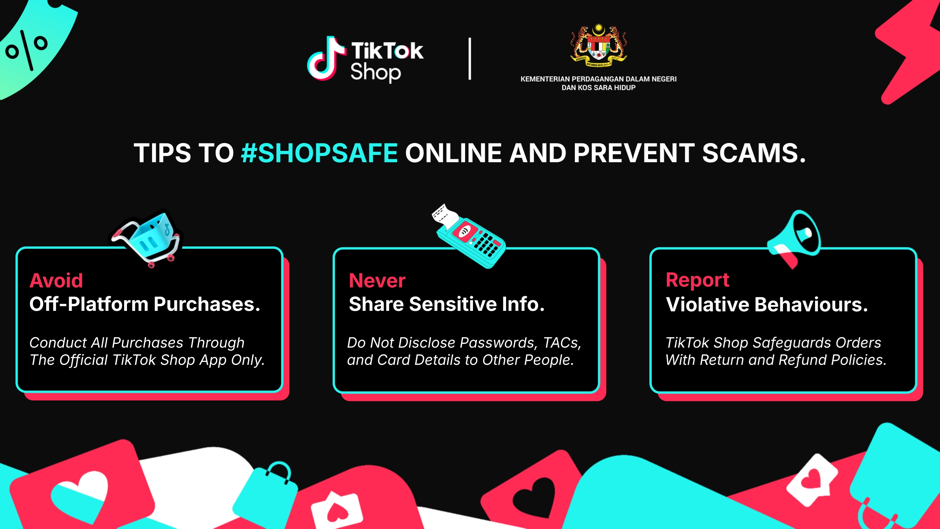
TikTok Shop has partnered with the Ministry of Domestic Trade and Cost of Living (KPDN) to spread awareness on #ShopSafe tips for online scam prevention. #ShopSafe is part of a wider online scam awareness initiative by TikTok Shop to empower Malaysians through education.

YB Datuk Armizan bin Mohd Ali, Minister of KPDN, emphasised, “We are delighted to partner with TikTok Shop to educate Malaysians on best practices when shopping online and to empower them with the right knowledge and tools to #ShopSafe digitally. We have found that a large majority of reported e-commerce scams were conducted outside of legitimate online shopping platforms and apps, where bad actors redirect consumers off-platform to complete transactions, either through phone numbers, suspicious links, or direct debits. TikTok Shop’s dedication to championing the rights and safety of consumers is commendable, and we look forward to combating online scams together.”

TikTok Shop Malaysia’s Director of Strategic Partnerships, Nur Azre Abdul Aziz, echoed the sentiment: “Safety is our top priority at TikTok Shop. We continuously invest in people and technologies for Malaysians to enjoy worry-free and secure online shopping experiences, such as through our robust 15-Day Free Return and Refund Policies. In the first half of 2024, we proactively rejected 20.4 million attempted product listings and two million seller account registrations globally that did not meet our standards. Combatting online scams is a collaborative effort and we are immensely thankful to KPDN for their support in educating Malaysians on our #ShopSafe tips. Together, we can keep our community informed and up to date on new scam trends, along with ways to safeguard each other against it.”

The #ShopSafe tips introduced by TikTok Shop and KPDN include:

  1. Avoid Off-Platform Purchases.
  • TikTok Shop users should conduct all online purchases using only the official app to ensure their protection against scams. TikTok Shop strictly enforces its Product Listing Guidelines and Seller Registration Guidelines, which help to prevent violative products and sellers on the platform. Policies such as the Platform Abuse Policy, Anti-Counterfeit Policy, and TikTok Shop Mall’s 100% Authenticity Guarantee, actively detect and minimise any potential fraudulent activities and deceptive behaviours on the platform.
  • Users should ensure that all online transactions are conducted through TikTok Shop’s secure in-app payment gateways. All purchases can then be verified and tracked on the in-app order history, even when opting for Cash-On-Delivery (COD) transactions.
  • Users should not download TikTok’s apps via external links or APK files. Download TikTok’s apps (which are listed ‘by TikTok Pte. Ltd.’) via the official website (https://www.tiktok.com) and platforms, including the Google Play Store and Apple App Store. Be wary of suspicious links and misspelled websites.
  • By adhering to these #ShopSafe tips, users can avoid common scams, such as false advertising, phishing, COD scams, brushing scams, malware, and more

2. Never Share Sensitive Personal Information With Other People.

  • Users can familiarize themselves with TikTok Shop’s Privacy Policy, which transparently outlines how TikTok Shop protects user data.
  • Users should be vigilant and avoid disclosing sensitive personal information to other people, especially potential scammers pretending to be TikTok Shop employees, authorities, or government officials. TikTok Shop will never ask for users’ sensitive personal information, such as passwords, TACs, and debit/credit card details through direct messaging, phone calls, or emails.
  • As an additional layer of protection, users should activate the 2-step verification feature on the TikTok app, which protects their accounts even when passwords are compromised.
  • With these helpful tips, Malaysians can prevent themselves from falling victim to Macau scams, phone scams, account takeovers, and more.

3. Report Violative Behaviours In-App.

  • Users are encouraged to directly report violative products, content, and sellers on TikTok Shop via the in-app reporting channel, available on every product display page.
  • Users can also reach out to live agents in-app for enquiries about their TikTok Shop orders, via the Help Center page.
  • TikTok Shop is governed by robust 15-Day Free Return and Refund Policies, which facilitate simplified and fair after-sales requests for customers facing issues with their orders on the platform. TikTok Shop does not tolerate any fraudulent or unlawful activities on its platform.

For more information on TikTok Shop Malaysia, please visit:

@tiktokshop_my

SC celebrates investED Leadership second cohort graduation

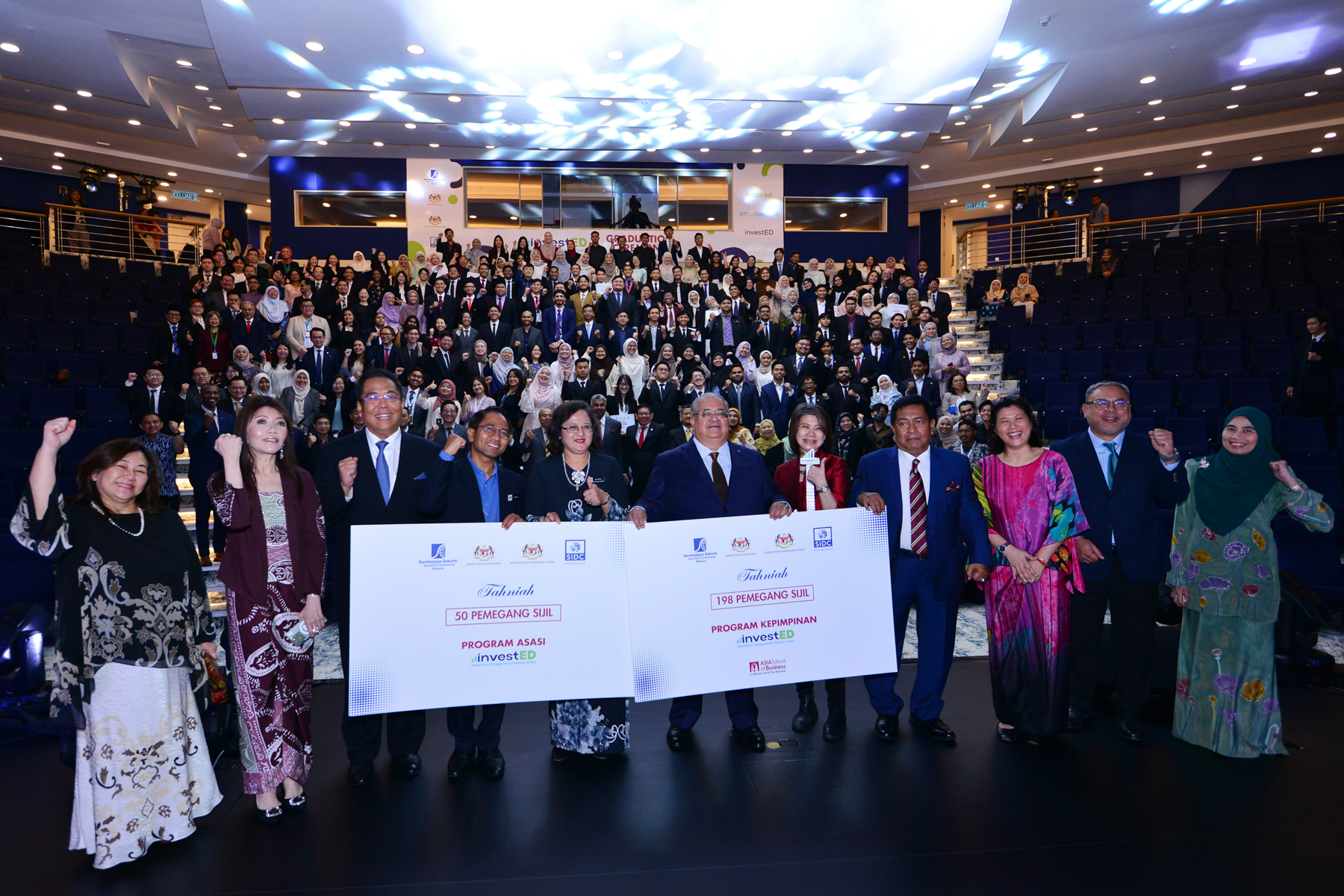
The Securities Commission Malaysia (SC) today marked a key milestone in its talent development journey with more than 190 graduates completing the second cycle of the investED Leadership Programme.
Officiated by Director General of Higher Education, Datuk Professor Dr. Azlinda Azman, the initiative continues to gain strong momentum as a key capital market initiative for nurturing skilled, future-ready talent for the industry.

Announced by Prime Minister Dato’ Seri Anwar Ibrahim in June 2023, this flagship graduate programme is designed to boost local graduates’ employability across various disciplines.

It also marks the first-ever collaboration of its kind between the SC, the Ministry of Finance, the Ministry of Higher Education, the capital market industry, and universities—reflecting a shared commitment to strengthening Malaysia’s human capital and future workforce.

In the span of just two years, the investED Leadership programme has trained 368 young graduates through close collaboration with industry and university partners. Of this, 233 graduates have been employed.

The second cohort of the Leadership programme, which began in August 2024, received 1,200 applications. Following a month of intensive classroom training at the Asia School of Business, selected participants were placed with various capital market firms for six months of on-the-job experience.
The SC Chairman Dato’ Mohammad Faiz Azmi said that investED is more than just a training programme – it is a bridge between classroom learning and career building.

“Beyond equipping our young talent with skills, the programme also builds their confidence, drives industry growth, and nurtures a new generation of professionals for Malaysia’s capital market,” he added.
The SC is now inviting applications for the third cohort of the investED Leadership Programme, now open until 30 June 2025. Apart from a potential career in the capital market industry, trainees also receive a monthly allowance of RM2,400 during the training period.
Separately, the investED Foundation Programme, delivered by the SC’s learning arm, the Securities Industry Development Corporation (SIDC), also saw continued progress. Last year, more than 1,000 students enrolled, exceeding the annual target of 800 by 25%.

In addition, investED has organised 44 career talks and 13 career fairs nationwide, reaching over 110,600 students in the last two years. Of this, 13,500 students have attended the career talks, surpassing the three-year target of 9,000 students in just under two years.

For more information, visit www.invested.my.