Sunday, 23 August 2026 Stay informed. No noise.

皇庭智家完成配售新股份,所得款項將支持東南亞業務擴張

香港 – Media OutReach Newswire – 2026年3月12日 – 皇庭智家控股有限公司(「皇庭智家」或「公司」)及其附屬公司(統稱「集團」(股份代號:1575.HK)欣然宣佈,公司已成功完成配售560,000,000股新股份,每股配售價為0.05港元,配售所得款項淨額約2,800萬港元。

是次配售所得款項淨額將進一步鞏固集團的財務狀況,並為日常營運及擴張計劃提供重要資金支持。集團計劃將其中65%所得款項用於擴大東南亞產能及供應鏈佈局,包括購買額外設備、租賃新生產基地及增聘工人,擴大廠房面積,進一步提高產能。集團預期至2026年年中,整體產能將實現翻倍,以滿足日益增長的市場需求,尤其來自北美市場的訂單。約15%所得款項將用於在東南亞地區設立陳列室作為銷售中心,助力產品推廣、連接出口買家並開拓新商機,餘下款項將作為集團日常營運資金。

集團於2025年完成全面業務重組,包括推進海外產能擴張、擴大獲客渠道、優化資源配置及產品升級等,已為可持續發展奠定堅實基礎。是次配售所得款項淨額將加快集團在東南亞的戰略擴張步伐,進一步提升海外生產能力,加強供應鏈韌性。相關擴張計劃預計2026年年中完成,這將鞏固集團的區域營運能力及長期規模化發展潛力。與此同時,集團將持續加大銷售、市場推廣及品牌曝光方面的投入,包括參與美國高點家具展等大型行業展會,並於東南亞地區增設陳列室,進一步擴大全球客戶基礎。透過提升產能及市場滲透率,皇庭智家致力增強自身競爭力、吸引更多元化的客戶群,並高效回應全球市場需求。

皇庭智家控股有限公司主席兼執行董事莊子毅先生表示:「我們衷心感謝資本市場對我們的支持。是次股份配售將大幅強化我們的營運資金,讓我們能夠靈活應對瞬息萬變的市場需求,推進下一階段的業務擴張。過去一年,我們聚焦業務重組,本集團現正加快產能升級,同時強化業務開發及市場推廣力度。我們也感激現有客戶及新客戶的支持,預期由2026年起訂單量將穩步增長,亦將反映在未來的營運表現上。我們將繼續致力鞏固營運根基,把握全新的增長機遇,為客戶及股東創造更大價值。」

Hashtag: #皇庭智家

The issuer is solely responsible for the content of this announcement.

關於皇庭智家控股有限公司

皇庭智家控股有限公司是在中國沙發出口行業中領先且歷史悠久的沙發及沙發套生產商之一,綜合設計、生產、銷售及市場推廣業務模式。集團出口沙發、沙發套及其他傢俱產品主要至加拿大、美國及歐洲等海外市場,以及其他地區,如墨西哥、澳洲及杜拜等。

28857

Bridge Data Centres Plans Major Investment with Global Partners to Strengthen Singapore’s Position as Asia Pacific’s Leading AI Hub

  • Strategic Investment of S$3-5 billion in Singapore to advance AI-ready data centre developments, supporting over 2 GW of AI-ready capacity globally, and driving technological innovation with international ecosystem partners.
  • First-mover advantage as one of Asia Pacific’s top three hyperscale data centre developers, with proven track record delivering large-scale campus developments in Malaysia, Thailand and India, supporting regional AI and cloud demand.
  • Pioneering sustainable energy solutions, including Singapore’s first floating hydrogen power generation model leveraging the nation’s strengths in maritime transport, port infrastructure and global energy supply chains and research into nuclear energy as a future clean power source for data centres.
  • Building an integrated innovation ecosystem in Singapore through partnerships with universities, research institutions and global technology companies, while supporting job creation and talent development initiatives for around 3,000 students and professionals.

SINGAPORE – Media OutReach Newswire – 12 March 2026 – Bridge Data Centres (BDC), a Singapore-headquartered digital infrastructure platform backed by Bain Capital, has announced ambitious plans to invest S$3-5 billion in Singapore to advance next-generation digital infrastructure and strengthen the country’s position as a leading AI and cloud hub in Asia Pacific.

BDC had announced its new strategic brand identity in early 2026 that reflects the Company’s position of being a leading hyperscale and AI-infrastructure builder with a growing network of mega-campus developments in Asia Pacific. With close to a decade of experience developing high quality data centres, BDC’s new brand identity reflects BDC’s reputation as platform built on disciplined execution, certainty of delivery, and the ability to scale with customers.

As AI and high-density workloads accelerate across Asia Pacific, customers are looking for partners who can offer world-class capabilities and local agility, provide bespoke solutions at scale, and deliver and operate with a proven track record.

With Singapore serving as its global headquarters, BDC is uniquely positioned to support hyperscale customers and global technology companies seeking high-performance, sustainable and scalable data centre platforms across Asia Pacific, while enabling global technology companies to establish and expand their presence in Singapore as they develop AI and digital capabilities in the region.

Over the past decade, BDC has established itself as one of Asia Pacific’s leading digital infrastructure developers and operators. The Company currently operates and develops hyperscale campuses across Malaysia, Thailand and India.

Building on strong relationships with global hyperscale customers and ecosystem partners, BDC is on track to expand its regional capacity to approximately 2 GW by 2030.

By deepening its investments in Singapore, BDC aims to support customers seeking world-class digital infrastructure expertise, strong technology partnerships and integrated energy solutions that enable the sustainable growth of AI workloads.

First-mover advantage

BDC is among the first data centre developers to foray into Malaysia, where the Company has several large-scale data centre campuses – both operational and under development.

BDC’s flagship MY06 campus is the Company’s first project in Johor, as well as the state’s first hyperscale data centre development. In addition, BDC is the first data centre developer in Southeast Asia to adopt a build-to-suit (BTS) model for hyperscale data centre construction. BDC was also among the first hyperscale operators in the region to deploy advanced liquid cooling technologies at scale, including cold plate liquid cooling, to support high-density and AI-driven workloads. BDC’s suite of sustainability initiatives at MY06 enabled the facility to achieve an annualised Power Usage Effectiveness (PUE) of below 1.2.

BDC is also the first in Southeast Asia to incorporate Prefabricated, Prefinished Volumetric Construction (PPVC) construction, an innovative method that assembles large building sections off site. This enabled BDC to complete MY06 within eight months, which is 40 per cent faster than traditional methods, while reducing on-site dust, waste and noise. This strategy is one of BDC’s key competitive advantages to support the growing needs of hyperscale customers in the region, including Singapore, who need to rapidly scale to meet increasing demand for more capacity to power AI-workloads.

BDC has built Malaysia’s first large-scale Water Treatment Plant (WTP) to treat effluent and convert it into high grade effluent water to cool its upcoming 400MW campus in Ulu Tiram, Johor. The WTP applies advanced Membrane Bioreactor (MBR) and Reverse Osmosis (RO) technologies to deliver superior water recovery and quality. Since commencing operations in 2025, the WTP has been significantly reducing reliance on potable water. It further strengthens the long-term resilience of BDC’s operations and supports Johor’s broader environmental agenda.

The WTP has also attracted interest from regional public agencies. In 2025, BDC hosted a technical visit by representatives from PUB, Singapore’s National Water Agency, who were presented with an overview of the plant’s design and its use of advanced membrane technologies for sustainable water reuse in data centre operations.

BDC’s MY-06 Campus (Building 1) has achieved Singapore’s BCA Green Mark Platinum Award granted under the BCA-IMDA Green Mark International for Data Centres 2024 (GMDC: 2024) framework. The BCA Green Mark Award recognises developers, building owners and individuals who have made outstanding achievements in environmental sustainability in the built environment. BDC is the first data centre operator to achieve this recognition for a facility based outside of Singapore. Beyond project certification, BDC has also signed a Memorandum of Understanding with BCA International (BCAI) to support the international adoption of Singapore’s Green Mark standards in global data centre developments. Through this partnership, BDC will promote Singapore’s sustainable building standards globally while reinforcing the country’s position as a leading AI and green digital infrastructure hub in the region.

These capabilities are aligned with Singapore’s Green Data Centre (DC) Roadmap, which emphasises energy efficiency, sustainable resource use and the integration of green energy to support the growth of digital infrastructure. BDC’s experience in delivering high-efficiency campuses positions it well to contribute to these objectives through practical, deployable solutions.

Pioneering energy solutions

As AI workloads drive the rapid expansion of digital infrastructure, energy resilience, data security and sustainability are becoming increasingly important. BDC is advancing a range of initiatives to explore alternative energy pathways and strengthen long-term power strategies.

A key collaboration is with Concord New Energy (CNE), where the partners are jointly developing Singapore’s first floating hydrogen power generation solution tailored for next-generation AI digital infrastructure, marking a significant milestone in advancing low-carbon energy pathways for the data centre sector.

BDC and CNE will also collaborate with Nanyang Technological University (NTU) to support the development of Singapore’s hydrogen ecosystem, accelerating research, engineering and the deployment of scalable clean energy technologies for digital infrastructure applications.

In addition, BDC is working with Singapore’s Agency for Science, Technology and Research Institute of High Performance Computing (A*STAR IHPC) and HY to evaluate the potential of nuclear energy as a long-term clean power source for data centres.

BDC’s alliance with A*STAR IHPC and HY will leverage advanced modelling and engineering expertise to explore innovative low-carbon energy pathways that will support Singapore’s sustainable digital growth while reinforcing the nation’s position as a trusted global technology hub.

BDC has also established partnerships with global leaders in energy and energy storage technologies, including CATL, EcoCeres, SK Innovation. Through these collaborations, the partners will jointly explore the establishment of innovation and research platforms to advance the development and pilot deployment of clean energy solutions such as hydrogen and biomass energy, as well as next-generation energy storage technologies designed for tropical climates. These initiatives aim to enhance thermal management, improve safety performance and increase the power density of data centre energy storage systems.

These collaborations and pilot initiatives will also contribute to talent development and workforce capability building in Singapore’s digital infrastructure and energy sectors. Through joint research programmes, technology pilots and knowledge exchange with universities, research institutions and industry partners, BDC aims to support the development of specialised expertise in areas such as advanced energy systems, sustainable data centre design, and next-generation cooling and energy storage technologies.

The initiatives are also expected to create high-value job opportunities in Singapore, spanning engineering, energy systems research, digital infrastructure operations and advanced technology development. By nurturing local talent and strengthening cross-disciplinary capabilities, these efforts will help build a robust talent pipeline to support Singapore’s growing AI and digital infrastructure ecosystem.

These partnerships represent a strategic step in BDC’s long-term roadmap to diversify power sourcing pathways, enhance energy security, and future-proof its Singapore data centre portfolio amid evolving grid constraints and decarbonisation dynamics. They also reinforce Singapore’s position as a regional hub for AI-ready digital infrastructure, while supporting the nation’s broader ambitions in sustainable energy innovation and green economic growth. Furthermore, these advancements accelerate Singapore’s ambition to achieve its net zero emissions goal by 2050.

Advancing technology and ecosystem growth

BDC is also pushing the envelope in innovative and sustainable cooling solutions through collaborations with ecosystem technology partners such as Vertiv, Terahop and Teracule, which are subsidiaries of Zhongji Innolight, as well as Delta Electronics and Supermicro.

Many of these partners are established leaders in data centre cooling, power systems and high-performance computing infrastructure, and are active participants in the broader AI infrastructure ecosystem, working closely with leading chipmakers to support next-generation compute environments.

Through its collaboration with Teracule and Terahop, the subsidiaries of Zhongji Innolight, BDC is exploring opportunities to jointly develop next-generation liquid cooling modules and high-performance optical connectivity solutions tailored for AI data centre environments. By combining Innolight’s expertise in optical modules and high-speed interconnect technologies with BDC’s experience in hyperscale data centre design and operations, the partners aim to advance integrated solutions that enhance thermal efficiency, data transmission performance and system reliability for high-density AI workloads.

The collaboration will also explore the establishment of joint research and development initiatives in Singapore, bringing together industry, academia and research institutions to support innovation in AI infrastructure technologies. Through this industry–academia-research collaboration model, the partners aim to accelerate the development and commercialisation of advanced cooling and connectivity technologies while contributing to Singapore’s broader push to strengthen research, talent development and innovation within the digital infrastructure ecosystem.

Together, these alliances focus on the development of advanced liquid cooling architectures, high-density GPU cooling solutions, and energy-optimised HVAC systems designed to support increasingly compute-intensive workloads. These technologies are critical in enabling the efficient operation of AI infrastructure, particularly as rack densities and thermal loads continue to rise in next-generation data centre environments.

Driving regional connectivity

As a Singapore-headquartered digital infrastructure platform, BDC continues to strengthen Singapore’s position as a regional hub for digital infrastructure and AI-driven innovation. With its highly developed connectivity ecosystem, robust regulatory environment and strong international network links, Singapore plays a central role in enabling the growth of the digital economy across Asia Pacific.

In this context, Singapore serves as one of the primary regional hubs, supporting high-value and latency-sensitive digital services such as edge computing deployments, international data traffic management and regional digital service platforms.

To support the burgeoning demand for AI and cloud computing across the region, complementary infrastructure resources across Asia Pacific can help provide additional capacity for compute-intensive workloads, including AI inference, machine learning and large-scale data processing. This cross-border model enables Singapore to remain the connectivity and innovation anchor of the ASEAN digital ecosystem, while regional infrastructure supports the scaling of digital capacity.

BDC’s collaborations with ecosystem partners, including major telecommunications companies and global technology firms, also help expand connectivity networks beyond Asia Pacific, further reinforcing Singapore’s role as a key regional interconnection hub.

One such ecosystem partner is Zenlayer, a leading global edge cloud and connectivity provider with a well-established customer base across Asia Pacific, North America and Europe. Through this partnership, BDC continues to strengthen its regional and international network connectivity anchored in Singapore.

This expanded network reach supports low-latency cross-border digital infrastructure integration, enabling hyperscalers to scale efficiently across markets while leveraging Singapore as one of the core regional gateways for digital services.

Catalysing Singapore’s AI-driven digital growth

Looking ahead, BDC will continue to leverage its operating model as a glocal platform, combining regional scale with deep local execution capabilities to expand across Asia Pacific. The Company’s strategy focuses on connecting key economic corridors, developing high-density, utility-integrated campuses, and working with ecosystem partners to align digital infrastructure growth with evolving energy pathways.

Anchored in Singapore as its strategic regional hub, BDC’s investments and partnerships contribute to the development of a robust digital infrastructure ecosystem that supports AI-driven workloads and cross-border connectivity.

BDC is also adopting an industry–academia–research collaboration mode, bringing together industry partners, universities and research institutes to accelerate innovation in AI infrastructure, advanced cooling technologies and sustainable energy systems. This integrated approach supports the development of new technologies while nurturing local talent and strengthening Singapore’s innovation ecosystem.

BDC’s initiatives in hydrogen, low-carbon power solutions and energy storage further contribute to the growth of Singapore’s green economy, catalysing investment in sustainable energy infrastructure and support the transition towards lower-carbon digital operations.

BDC’s efforts support the creation of high-value jobs and the development of specialised technical expertise in Singapore, spanning engineering, digital infrastructure and advanced energy systems. In addition, BDC will work with universities, research institutes and industry partners to support talent development initiatives, including internships, training programmes and collaborative research opportunities, contributing to the development of a strong local talent pipeline for Singapore’s AI and digital infrastructure ecosystem.

Collectively, these contributions reinforce Singapore’s position as a leading AI and digital infrastructure hub in Asia Pacific, underpinned by resilient, efficient and sustainable infrastructure.
Hashtag: #BridgeDataCentres #Singapore

The issuer is solely responsible for the content of this announcement.

Bridge Data Centres

Bridge Data Centres (BDC) is a Singapore-headquartered hyperscale data centre provider delivering high-performance, next-ready infrastructure across Asia Pacific. Backed by Bain Capital, BDC operates in Malaysia, Thailand, India, and other high-growth markets, with the capability to deliver up to 3 gigawatts (GW) of capacity globally by 2030 through partnerships with sister platforms in Europe and the United States.

28857

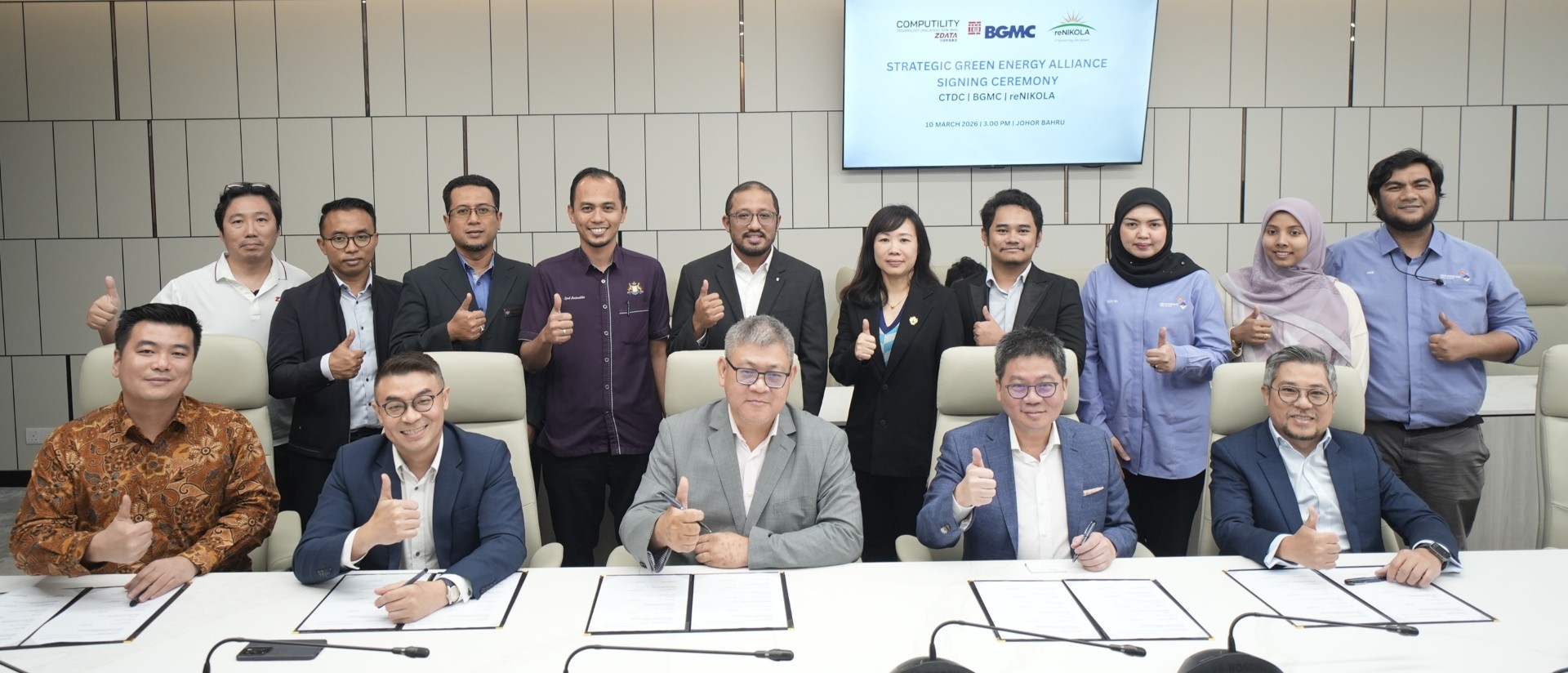
CTDC, BGMC and reNIKOLA form green energy alliance

Computility Technology (Malaysia) Sdn Bhd (CTDC), BGMC Energy Holdings Sdn Bhd (BGMC), and reNIKOLA has signed a strategic term sheet for a large-scale, long-term green energy supply programme.

Under the agreement, CTDC, a fully-owned subsidiary of ZDATA, will utilise the renewable energy
generated by BGMC’s solar farm assets to power ZDATA’s first AI-data centre at Gelang Patah. Scheduled to commence in 2028, the program is projected to deliver approximately 630,000 MWh of renewable energy annually. This partnership represents a significant milestone in decarbonising industrial infrastructure and directly supports Malaysia’s national energy transition goals.

The collaboration underscores a collective commitment to embedding ESG principles into the heart of large-scale digital and industrial ecosystems.

Achieving Water Independence: A Parallel Sustainability Milestone
In a simultaneous breakthrough for environmental stewardship, CTDC announced it has officially
eliminated its reliance on municipal water for its cooling systems.
Key benefits of the water initiative include:

  • Resource Resilience: Establishing a self-sustaining cooling loop independent of the public
    water grid.
  • Reduced Local Impact: Significantly alleviating pressure on Johor’s municipal water
    resources.
  • Operational Autonomy: Resolving previous third-party infrastructure challenges through
    direct investment in proprietary recycling technology.

Building the Infrastructure of Tomorrow
Together, the renewable energy alliance and the move toward water circularity position CTDC and its
partners at the forefront of responsible development. These initiatives are designed to meet the
rigorous demands of the modern digital economy while ensuring a minimal environmental footprint.
With the signing of the Green Energy Alliance, all parties now enter the primary implementation phase
to ensure project delivery ahead of the 2028 operational target.

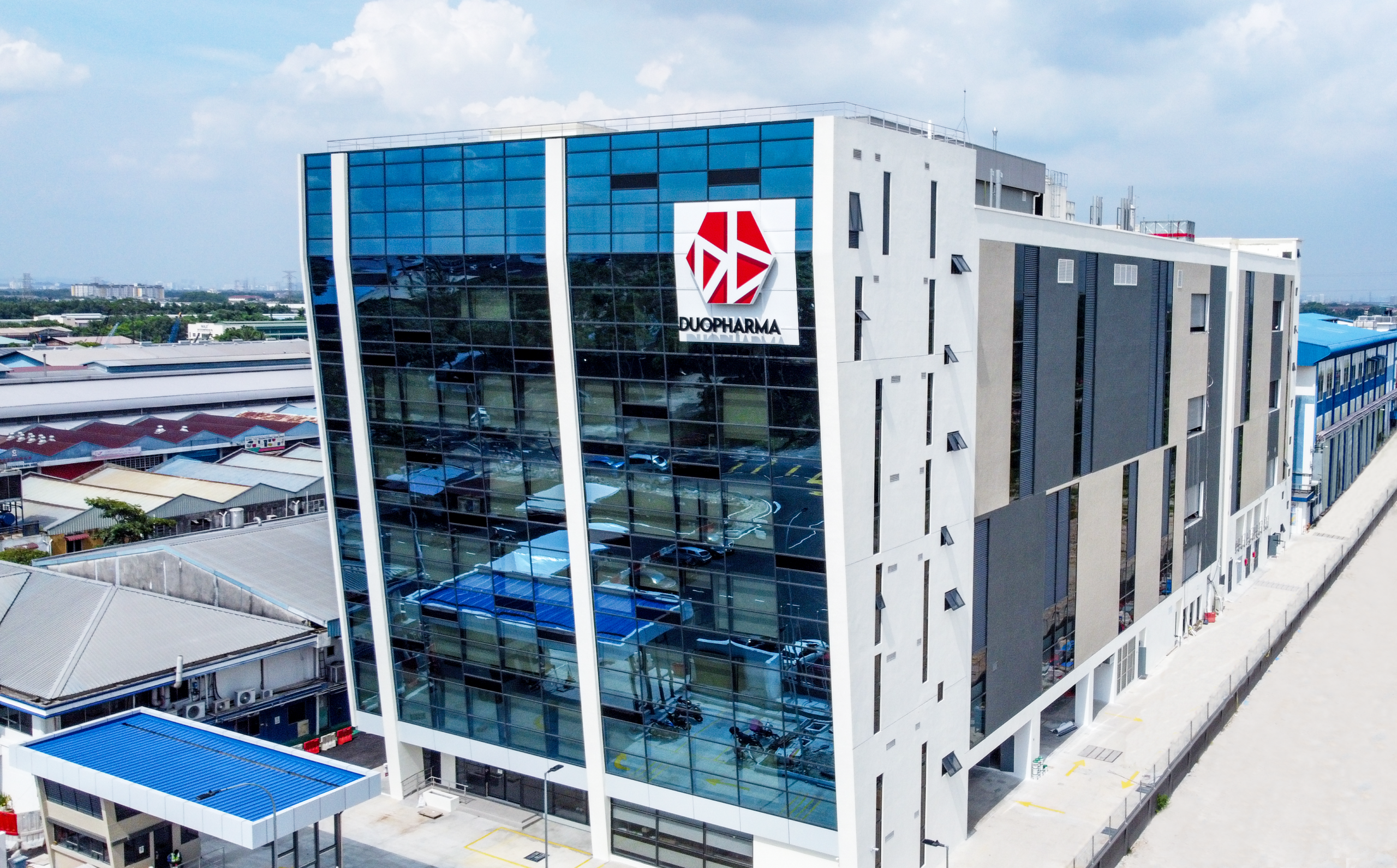
Duopharma Biotech maintains robust revenue and profit growth momentum

Duopharma Biotech Berhad (Duopharma Biotech) reported a revenue of RM931.69 million for the year ended 31 December 2025, up 14.5% compared to revenue of RM813.70 million in financial year 2024. In line with increased revenue, profit for the year also saw robust growth, with profit before tax (PBT) for FY2025 growing 43.6% year-on-year to RM114.91 million, while profit after tax (PAT) for FY2025 went up by 39.6% year-on-year to RM87.46 million.

The sustained double-digit growth was primarily driven by resilient demand from both the public and private sectors across all business segments, complemented by a one- off surge in insulin supply in the first half of the year following supply normalisation. PBT growth was mainly attributable to the higher revenue base, coupled with continued favourable Active Pharmaceutical Ingredient (API) costs, positive foreign exchange movements and improved operational efficiency, which collectively enhanced profitability.

Meanwhile, revenue in Quarter 4 of FY2025 stood at RM224.69 million, marginally higher compared to RM222.49 million in the preceding quarter, spurred by stronger demand from the private market, including a seasonally-influenced sales spike for an antiviral flu product, offsetting lower fourth quarter sales to the public sector.

Wan Amir-Jeffery Bin Wan Abdul Majid, Group Chief Executive Officer of Duopharma Biotech Berhad, commented, “The robust growth in revenue and profit in FY2025 augurs well for Duopharma Biotech’s future potential. The Government’s healthcare policy initiatives and agenda, including 2.7% more healthcare funding year-on-year via Budget 2026 and a focus on improving pharmaceutical research and manufacturing for a stronger supply chain, laid out in the 13th Malaysia Plan, offer the potential for us to participate in achieving national healthcare goals, strengthening our position as a leading Malaysian pharmaceutical player.”

New and Ongoing Contracts
On 16 February 2026, Duopharma Biotech announced that the Government of Malaysia had accepted the tender offer from Duopharma (M) Sendirian Berhad (a wholly-owned subsidiary of Duopharma Biotech) to supply insulin injections to the Ministry of Health’s facilities. The new contract, running until 5 February 2028, has a total estimated value of approximately RM52.54 million. Also on 16 February 2026, Duopharma Biotech announced that Duopharma Marketing Sdn Bhd (a wholly-owned subsidiary of Duopharma Biotech) and Biocon Sdn Bhd to supply Recombinant Human Insulin formulations under the Ministry of Health’s procurement by way of direct negotiation. The new contract will run until 15 May 2026, with a total estimated value of approximately RM65.08 million. The two new contracts are expected to contribute positively to the Company’s future earnings, barring any unforeseen circumstances. This will also contribute to better diabetes management in Malaysia by supplying high quality and cost- effective biosimilar insulin and insulin injections.

As previously announced in 2024 and 2025, Duopharma Biotech is currently contracted to supply 100 products at a combined estimated contract value of approximately RM684.15 million to Ministry of Health facilities, until 31 December 2026.

Wan Amir-Jeffery added, “In FY2025, the Group’s regional operations also recorded encouraging progress through improved market penetration and growing demand in key ASEAN markets. Looking ahead, the new leadership at Duopharma Biotech will remain proactively focused on enhancing operational efficiencies, optimising cost management strategies, and executing strategic initiatives. Barring any unforeseen circumstances, the Group aims to deliver a satisfactory performance for the financial year ending 31 December 2026.”

In addition to Wan Amir-Jeffery taking on the leadership mantle at Duopharma Biotech, Rohayu Rosnani Binti Mohd Adanan has also been appointed the Company’s new Chief Financial Officer.

For FY2025, Duopharma Biotech’s Board of Directors declared a second interim dividend of 3.05 sen per share (2024: 2.0 sen) equivalent to RM 29.34 million (2024: RM 19.24 million). This brings the total dividend for FY2025 to 4.55 sen per share (2024: 3.0 sen), amounting to approximately RM43.77 million, an increase of 51.7% from FY2024. The entitlement date and the payment date of the second interim dividend will be on 13 March 2026 and 30 March 2026 respectively. The Board of Directors has resolved that the Dividend Reinvestment Plan shall not apply to the aforesaid interim dividend.

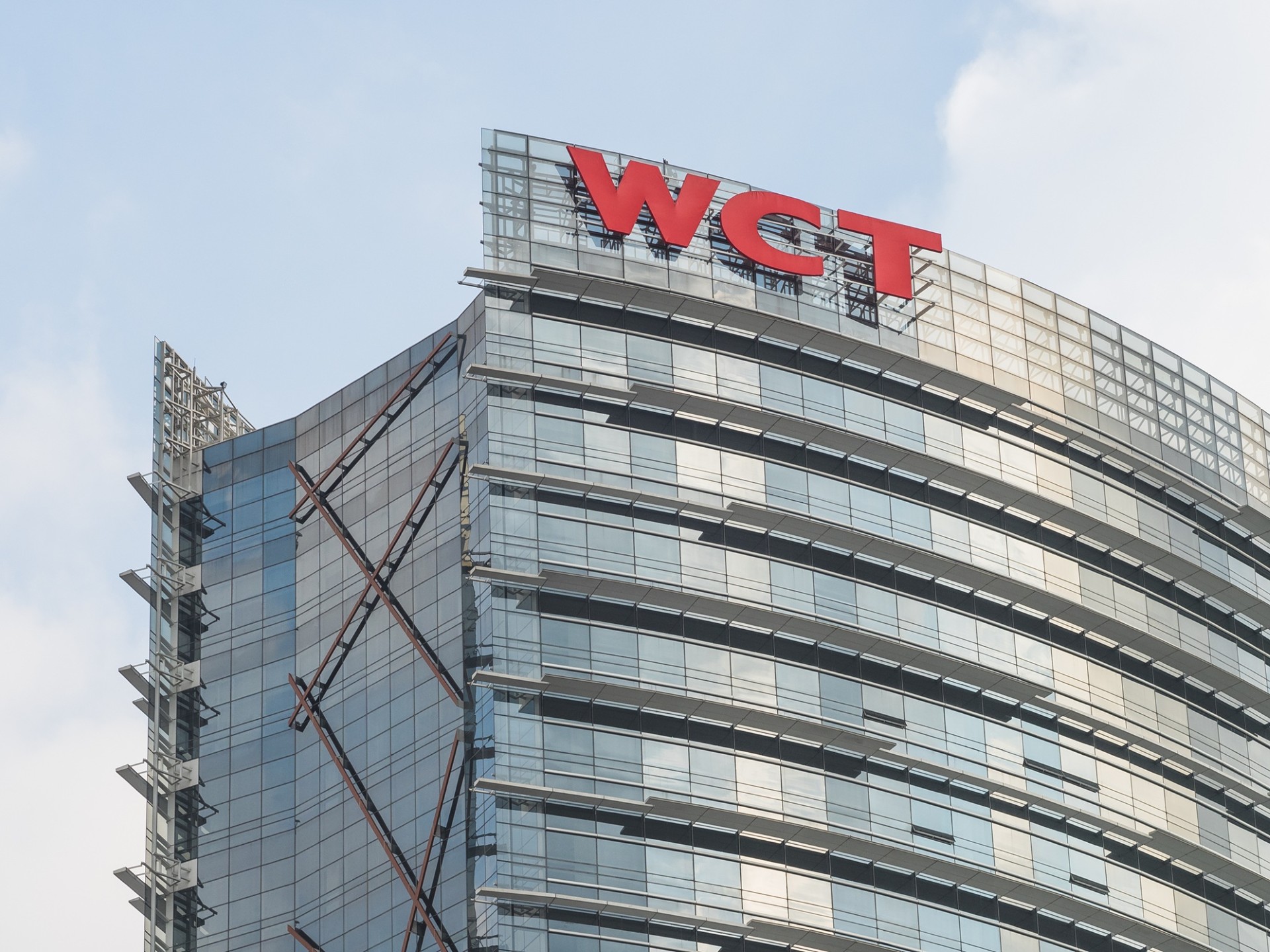
WCT announces stable performance amid challenging market conditions

WCT Holdings Berhad (WCT/the Group) recorded revenue of RM465.5 million for its fourth quarter ended 31 December 2025 (Q4FY25), compared with RM552.8 million in the preceding year’s corresponding quarter ended 31 December 2024 (Q4FY24). The Group recorded profit attributable to equity holders of RM10.0 million in Q4FY25, compared with RM57.3 million in Q4FY24.

For the financial year ended 31 December 2025 (FY25), the Group recorded higher revenue of RM1.97 billion, compared with RM1.83 billion in the preceding year (FY24), representing an 7.7% increase. The Group’s profit attributable to equity holders decreased to RM47.8 million in FY25, compared with RM227.9 million recorded in FY24. The higher profit in the preceding year was primarily attributable to a net gain after tax on remeasurement of interest in a jointly controlled entity amounting to approximately RM184 million.

For FY25, the Group’s Engineering and Construction Division recorded revenue of RM940.6 million (FY24: RM1.05 billion), representing 47.7% of the Group’s consolidated revenue, and achieved an operating profit of RM2.9 million, reversing from an operating loss of RM25.4 million in FY24.

Meanwhile, the Group’s Property Development Division achieved higher revenue and operating profit of RM806.8 million (FY24: RM516.2 million) and RM133.3 million (FY24: RM36.9 million). The growth in both the revenue and operating profit was primarily attributed to higher sales and billing, as well as land sales. To date, the Group’s unbilled sales stood at RM 959.8 million.

Dato’ Lee Tuck Fook, Group Managing Director, WCT Holdings Berhad said, “The healthy take-up rates for Adison (Phase 1B), W City Larkinton Johor Bahru, comprising residential units and retail shops reflect sustained demand for well-planned developments in strategic locations and reaffirm buyers’ confidence in WCT’s offerings.

The successful handover of The Maple Residences in WCity OUG @ Kuala Lumpur and Adenia apartments in Bandar Parklands, Klang further demonstrates our commitment to timely delivery.”

The Property Investment and Management Division recorded a lower revenue of RM225.6 million and an operating profit of RM67.1 million (FY24: RM268.5 million and RM370.4 million). The decline in revenue was primarily due to the absence of revenue contributions from Paradigm Mall Johor Bahru and Bukit Tinggi Shopping Centre after the injection into Paradigm REIT on 10 June 2025. Operating profit was lower year-on-year mainly due to a gain on dilution of interest in a joint venture amounting to RM184 million recognised in preceding year.

“While the Group continues to see steady contributions across our core divisions, we are well positioned to capitalise on resilient consumer spending and rising tourist arrivals. In line with the momentum of the Visit Malaysia Year 2026 initiative, we anticipate stronger performance across our retail malls and hotel portfolio, driven by higher footfall and increased occupancy rates,” Dato’ Lee concluded.

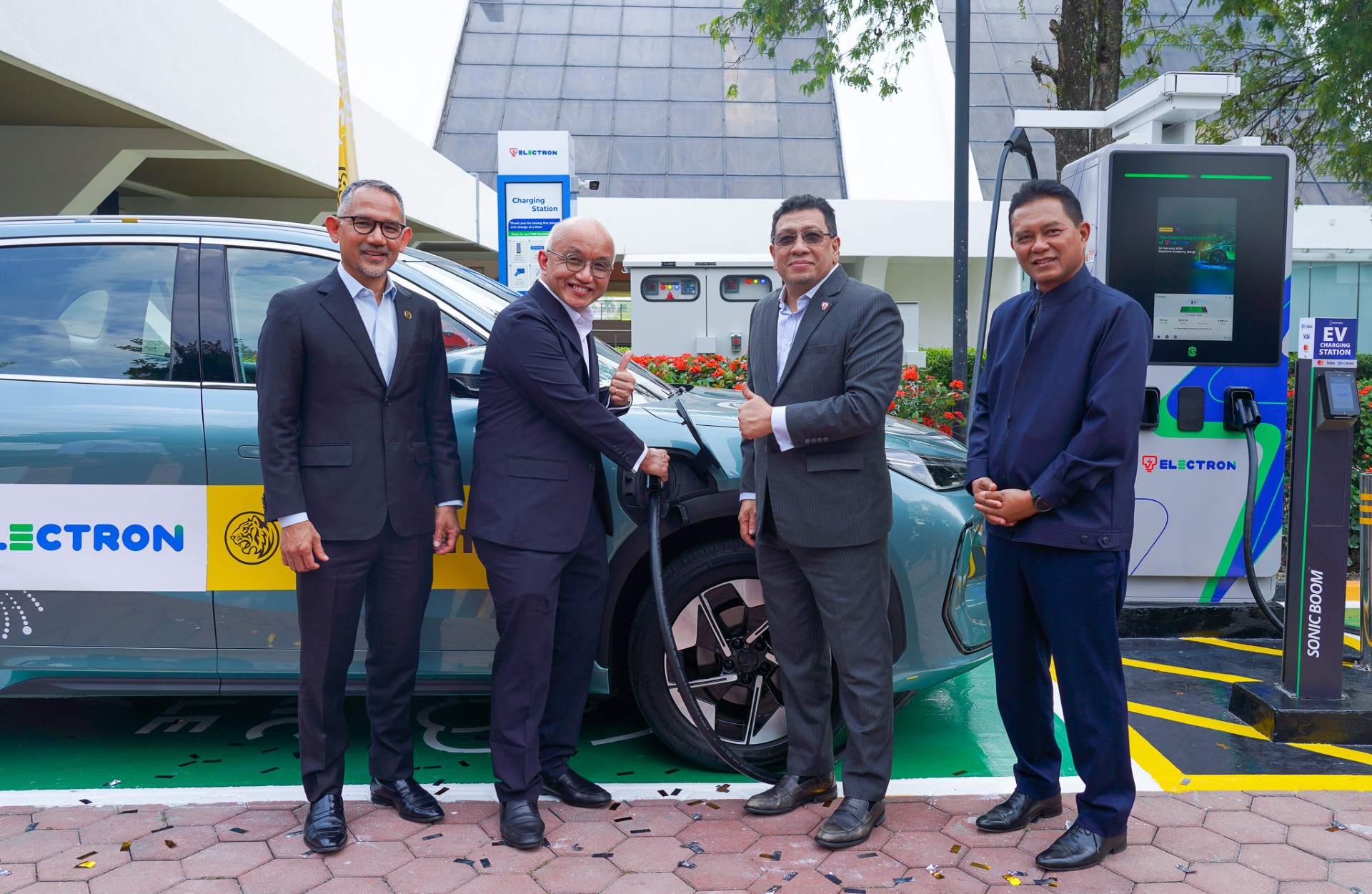
Maybank and TNB Electron launch EV charging pilot

Maybank and Tenaga Nasional Berhad (TNB), through its electric vehicle (EV) charging arm, TNB Electron, today announced the launch of a strategic EV charging pilot at Maybank Academy, Bangi, marking the first collaboration between TNB Electron and a financial institution to support Malaysia’s sustainability agenda.

The initiative builds on a broader collaboration in sustainable finance and energy transition initiatives, including Maybank’s support for TNB’s Transition Finance Framework, translating strategic alignment into practical, on-ground implementation.

Dato’ Sri Khairussaleh Ramli, President and Group CEO of Maybank said: “This partnership underscores Maybank’s ROAR30 New Economy pillar that focuses on advancing urban and smart city solutions, as well as Maybank’s sustainability commitments. By making EV charging more accessible and convenient, we are supporting clients in shifting to cleaner mobility while addressing a key barrier to wider full EV adoption. With significant headroom for growth, Malaysia’s EV ecosystem still remains at an early but promising stage. In 2025, Maybank disbursed over RM1 billion for EV and qualified hybrid car financing.”

Malaysia’s EV industry is surging, with registrations up 106% year-on-year, led by hotspots like the Klang Valley, Johor Bahru, and Penang. With over 5,700 public charge points nationwide, drivers can charge conveniently for daily, weekend, and festive balik kampung travel. TNB Electron also offered a 25% per kWh discount during school holidays and peak festive periods to support adoption. TNB’s charging network points are strategically located at highways, trunk roads, commercial areas and TNB’s premises to support confident nationwide travel.

Under the partnership, TNB Electron will install, operate and maintain the charging facilities, leveraging TNB’s nationwide EV infrastructure expertise and Maybank’s network to support low-carbon mobility through a scalable and reliable model.

Datuk Ir. Megat Jalaluddin Megat Hassan, President/Chief Executive Officer of TNB added: “This collaboration marks a significant step forward in strengthening TNB Electron’s role as a key enabler of Malaysia’s EV ecosystem. With more than 260 EV charge points deployed nationwide, we are advancing grid readiness, enhancing system reliability and supporting long-term sustainability through partnerships with forward-looking organisations such as Maybank.”

With insights gained from this pilot, Maybank and TNB Electron will continue to explore opportunities for deploying EV charging facilities at selected Maybank branches across Peninsular Malaysia, focusing on strategically located sites to enhance accessibility and support the growing adoption of EVs nationwide.

Tealive expands FMCG Footprint through Jaya Grocer

Tealive has launched its 3-in-1 premix beverage range at Jaya Grocer, the leading mass-premium supermarket chain, to bring its café-style drinks into Malaysian homes through everyday retail channels.

Loob Holding Founder and CEO Bryan Loo said the move came amid sustained growth in Malaysia’s at-home beverage segment, with more food and beverage operators expanding into packaged formats to diversify revenue streams and reduce reliance on outlet traffic.

“Our partnership with Jaya Grocer has been an important part of Tealive’s journey, dating back to the Covid period when we first introduced our DIY Bubble Tea Kit to bring the Tealive experience into Malaysian homes. Today’s launch of our Tealive 3-in-1 premix range marks another meaningful milestone as we extend that experience into everyday routines,” he said.

“This collaboration allows consumers to enjoy their favourite Tealive beverages anytime, anywhere, while reinforcing our commitment to making café-quality drinks more accessible. As we continue to evolve into a complete beverage lifestyle brand, this retail expansion reflects our vision of becoming a seamless part of Malaysians’ daily lives, whether in-store or at home, plus offers an opportunity to leverage existing brand equity in new consumption occasions.”

The collaboration positions Jaya Grocer as Tealive’s strategic retail partner for this expansion, providing a curated supermarket platform and access to a broader consumer base seeking convenient, café-quality beverage options for at-home consumption.

Under the rollout, consumers can choose from milk tea, coffee and chocolate series. The milk tea range includes Signature Milk Tea, Gula Melaka Teh Tarik, and Milk Tea Matcha; the coffee series comprises Signature Coffee, Coffee Hazelnut, and Caramel Macchiato; and the chocolate range features Signature Chocolate, Chocolate Hazelnut, and Salted Dark Chocolate.

A key flavour signature across the range is Tealive’s brown sugar profile, incorporated into selected variants to replicate the brand’s popular caramelised brown sugar taste in premix form.

Jaya Grocer is the first supermarket chain to offer Tealive’s mixed-flavour 3+1 Fun Packs, designed for families and office settings seeking variety and value.

Mobility Trends to Watch in 2026: The Expanding Role of Ride-Hailing Platforms

Industry insights indicate that ride-hailing platforms are gradually expanding beyond core passenger transport, with increased focus on predictive safety capabilities, AI-enabled customer support, embedded payment systems, and more structured regulatory engagement.

MANILA, PHILIPPINES – Media OutReach Newswire – 11 March 2026 – 2026 may be the year that more ride-hailing apps will expand their operations to become mobility superapps, according to industry experts who have analyzed the movements of multiple apps across the board. The analysis suggests that this shift will be driven by multi-service bundling, predictive safety features, boosted AI integration, cashless payment options, and coordination with regulators.

“Our global market review found that the way forward for ride-hailing platforms is to evolve into mobility superapps,” Evgenia Matrosova, inDrive Chief Ride-Hailing Officer, said. “Users want convenience more than anything, where diverse mobility solutions, proactive safety functions, and seamless digital payments can all be found in one platform. Integrated services won’t just push innovation forward; they signify reliability and flexibility on the road and beyond.”

#1 Ride-hailing apps may begin venturing into adjacent services.

More ride-hailing apps may begin expanding into adjacent mobility services this year due to an increase in global demand for integrated transport services. For instance, market intelligence firm Sensor Tower listed inDrive and other ride-hailing platforms among the most downloaded travel apps in 2025—revealing global demand for their expansion into adjacent travel services.

Zooming into the platforms’ service expansion, industry experts are optimistic about the potential in food delivery. Data shows that restaurants worldwide are considering working with delivery platforms that offer them more control over their profit margins.

A separate Ken Research study also revealed that online travel booking has also enjoyed similar local growth, with a projected revenue of Php 50 billion. This could boost pre-booked airport pickups’ popularity, with travelers viewing this as a much-needed convenience.

These all reveal one thing: the lines between passenger transport and adjacent mobility services are beginning to blur. Thus, ride-hailing apps may begin venturing into adjacent mobility services to create an all-in-one experience for users.

#2 Safety systems are slowly shifting from protection to prediction

At present, in-app safety features are often limited to real-time monitoring, emergency hotline buttons, and a speed dial to the platform’s 24/7 support. However, industry experts forecast that ride-hailing apps may begin using AI-powered analytics and risk modeling for predictive road safety measures.

For instance, the Forum of European National Highway Research Laboratories says that AI can collect traffic data, weather feeds, and other key information to predict collisions and recommend alternate routes. Predictive safety features like this can help ride-hailing apps move past interventionary measures and proactively protect their drivers and passengers.

#3 AI to enhance the in-app customer experience

Industry experts also say that mobility services may continue leveraging AI to improve customer experience. There are also early indicators that ride-hailing apps may experiment with using human-like AI voices in their customer support systems. AI may also be used in developing personal mobility agents that manage drivers’ schedules and earnings and intervene during emergencies.

With ride-hailing platforms considering venturing into food delivery, they may use AI to simulate customer interactions. Large language models can simulate dialogue-based ordering, allowing users to verbally dictate their orders or send them via chat platforms like WhatsApp. Not only would this speed up the delivery process, but it would also cater to users who prefer personal interactions.

#4 Ride-hailing apps eyeing seamless in-app payment systems

Cashless payment options, such as e-wallets and online bank transfers, are gaining popularity among Filipino consumers. A Bangko Sentral ng Pilipinas report found that 57.4% of Filipinos’ retail transactions were paid online. This creates an opportunity for ride-hailing companies to make their payment schemes more seamless. They may consider embedding cashless payment options in their apps, which can automatically deduct their transaction from their attached online banking and e-wallet accounts.

inDrive’s internal research shows that Filipino commuters are also price-sensitive, often allocating tight budgets to their transportation expenses. This consumer attitude could pave the way for ride-hailing companies to install in-app wallets. These facilitate better online budgeting and accommodate users who prefer cash.

#5 Ride-hailing apps expected to continue to uphold price fairness

Strict regulatory compliance has always influenced the dynamics of the ride-hailing industry. In particular, the Land Transportation Franchising and Regulatory Board has been staunch in implementing its fare matrix. Just last December, the regulator imposed surge caps to maintain affordable holiday fares—underscoring its commitment to keeping prices affordable for passengers.

With this in mind, industry dynamics suggest a growing emphasis on collaborative regulatory models. Experts advise ride-hailing companies to continue collaborating with government regulators to promote pricing fairness. They also recommended continuing to implement lower commission rates to increase drivers’ income and strengthen passenger loyalty. This year, platforms may also take it a step further by rolling out promotions, capped surge policies, and loyalty models.

These trends paint a picture of what could come next for the ride-hailing industry this year. With these in mind, inDrive will continue to uphold transparency, safety, and inclusivity for drivers and passengers alike. For more updates on inDrive’s initiatives this year, visit www.inDrive.com or follow @inDrive.ph on social media.

Hashtag: #inDrivetrends #MobilityPhilippines

The issuer is solely responsible for the content of this announcement.

About inDrive

inDrive is a global mobility and urban services platform. The inDrive app has been downloaded over 400 million times, and has been named the second most downloaded mobility app for the third consecutive year. In addition to ride-hailing, inDrive provides an expanding list of services, including intercity transportation, delivery, and financial services. In 2023, inDrive launched New Ventures, a venture and M&A arm.

inDrive operates in 1065 cities in 48 countries. Driven by its mission of challenging injustice, the company is committed to having a positive impact on the lives of one billion people by 2030. It pursues this goal both through its core business, which supports local communities via a fair pricing model; and through the work of its impact programs.

For more information visit

28857

保瑞公佈2025年全年財務報告

創下2020年以來最健康營運現金流利潤率 雙引擎平台基底更紮實 支撐2026年補強型投資拚重返增長、再上一階 董事會擬配發每股新台幣10元現金股利

香港 – Media OutReach Newswire – 2026年3月11日 – 全球領先的CDMO及專科製藥公司——保瑞藥業股份有限公司(Bora Pharmaceuticals,「保瑞」;TWSE:6472;OTCQX:BORAY)今日公布2025年全年財務成果與營運亮點,並提供2026年展望。

2025年全年營運與財務重點:

  • 公司2025年全年營收(停業部門另列)為新台幣190.14億元,較前一年成長9.11%;基本每股盈餘(EPS)為23.90元,其中第四季EPS為2.63元。全年EPS較去年下降24.22%,為停業部門每股淨損11.24元所致。
  • 在第四季,隨著美國明尼蘇達州廠區之Plymouth區域將部份Upsher-Smith自有產品之生產轉移的技術轉移工作完成,原由Plymouth生產的產品重新歸入銷貨成本(COGS)。因此,以可比基礎與2025年其他季度相比,第四季毛利率約為38–39%。第四季毛利率較前一季下降並導致營運槓桿減弱,主係胃食道逆流藥物DLS於11月面臨新競爭者,下游拉貨動能轉為觀望、放緩。此外,當季較高的有效稅率亦來自自製的學名藥DLS透過關係人交易後面臨下游銷售量減少使得營收與稅負無法同步。同時,Upsher-Smith的主要學名藥產品Topiramate ER面臨更激烈的市場競爭,也對毛利率造成負面影響。
  • 管理層認為,2025年第四季的營運費用結構更能反映公司此階段的營運平台模式與策略轉型。推銷費用隨著市場占有率推進與通路拓展而呈現季節性上升,而研發支出則維持在相對審慎的範圍內。隨著規模擴大帶來固定成本吸收能力提升,毛利率的改善將成為推動營運槓桿的關鍵因素。
  • 全球藥品銷售業務在第四季仍有不小的波動,主因仍在等待新產品核准,無法填補下市產品與漸失動能的既有產品下滑。短期內,提升學名藥產品組合競爭力是公司在營收與毛利率上的重要課題。不過公司對轉型進展並不悲觀,在Vigabatrin系列產品帶動下,保瑞罕病產品組合在各劑型市場占有率持續提升。公司將於2026年積極補充在研與新上市產品,以恢復獲利性成長。
  • 集團CDMO業務在第四季營收與毛利率雙升。受惠於產能擴張及新劑型導入,2025年CDMO營收含內部訂單年增53.8%,達新台幣106.4億元。若排除內部訂單,營收為新台幣75億元,較2024年成長19.53%。
  • 2025年是保瑞併購後整合與策略整併的一年。第四季營運現金流利潤率達34.74%,創近年新高,相較去年同期為-4.00%,此改善反映保瑞集團已轉型為一可在更大且更強的平台上運作、效率更高的組織。董事會提議配發每股新台幣10元現金股利,展現對集團現金創造能力提升及長期股東報酬的信心。
  • 本季因員工認股權行使及可轉債轉換,股本增加3.18%。

保瑞集團董事長盛保熙表示:「2025年對保瑞而言是具有轉折意義的一年。除了整合外,我們更加強調紀律性資本配置與資產負債表管理。在站上更大的成長平台後,我們重新檢視現金部署方式、雙引擎業務細部的技術與產品組合,並且定義在穩定股權結構下,未來應觀察的報酬指標。距離2024年併購完成一年後,我們實現了歷史最高的營運現金流利潤率,相較去年同期集團剛轉型至目前規模時呈現明顯翻轉。

然而,外部環境出現重大變化。我們在美國貿易與產業政策重新調整的背景下營運,這也促使供應鏈重新配置並帶來匯率波動。同時人工智慧的快速導入正在改變製造業競爭格局,甚至影響資本市場資金流向。此外,集團部分核心學名藥產品也面臨競爭壓力。若排除停業部門影響,依據2025與2024年重分類後的財務報表,繼續營運單位EBITDA較2024年下降19.0%,但仍較2023年高出12.5%,顯示過去兩年所建立的營收與獲利基礎仍然穩固。

儘管面臨這些挑戰,集團仍維持獲利並保有財務彈性。值得注意的是,我們在未新增股權稀釋的情況下,透過既有信用額度完成保瑞歷史上最大規模的CDMO資本支出計畫與Upsher-Smith的業務轉型。雖然這個新平台的價值擴張醞釀較公司原先預期稍長,但這一年也展現了我們營運模式的韌性、有紀律的財務管理,以及在維持獲利與資產負債表穩健的同時推動策略投資的能力。

我們也非常高興今年稍早與GSK完成續約。自合作開始以來,這段夥伴關係一直建立在互信與對品質的共同承諾之上。隨著最新合作進展,我們將與GSK邁向十年的合作關係,展現雙方皆相當重視可靠的供應鏈。我們在過去幾個月也與多家成長快速的製藥公司建立新的合作關係,進一步擴展北美CDMO網絡的客戶基礎。

總結而言,CDMO業務的未來12個月在手訂單在經歷一個季度的消化及第四季工作天數較少影響來到2.64億美元。2025年新簽訂單達4.82億美元,其中89%為商業化階段訂單,另有16個分子處於研發階段,為2026年起的營收提供良好能見度,特別是在加拿大與馬里蘭針劑廠。

在全球銷售業務方面,Upsher-Smith目前儼然是一個嶄新的組織。其業績愈來愈由產品生命週期管理所驅動,包括持續最大化嬰兒痙攣產品線的價值,同時積極補充在研與新上市產品,並特別聚焦於罕病領域的差異化品項與新藥銷售機會。在學名藥方面,我們已確認2026年將上市7項產品,包括近期核准的用於乾眼症的Cyclosporine以及一項治療低鈉血症的授權產品。

此外,根據我們目前對美國相關專利判決的理解,若保盛藥業取得原廠為默克Mavenclad的Cladribine學名藥核准,Upsher-Smith作為獨家經銷商將有機會在符合相關法規與商業條件下於美國市場準備產品上市。

除了每年推出超過10項學名藥產品以重啟增長的基礎目標外,我們也已辨識出多項能夠提升營收與EBITDA的補充型投資機會,以進一步強化2026年的業務基礎,包括逐步擴大注射劑與505(b)(2)產品組合,提升產品差異化與經濟效益,同時深化專利產品與專科通路的滲透率。我們期許在今年結束時,集團的產品組合更加多元且平衡,預期未來獲利韌性將提高,成長軌跡也將更為穩定。」

2025年全年營運成果暨2026年展望

業務進展說明:

  • 全球委託研發暨代工製造服務(Global CDMO Operations)業務當季與全年皆創下營收新高:
    第四季CDMO營收占總營收約45.78%,2025年全年占比為39.43%。全年共開發與製造25億劑藥品。前20大全球製藥公司的營收貢獻比例略降至29%,過去則維持在微幅超過30%區間,主要反映新增多家快速成長的製藥客戶加入公司客戶組合,且其成功上市產品的貢獻逐步提升。

    隨著公司持續擴充 CDMO 產能與能力,包括約10%的無菌充填產能提升以及固體與液體劑型合計約3%的淨擴張,保瑞集團持續關注各廠的產能利用率。著眼於美國製藥市場的重要性以及供應鏈韌性的考量,公司相信在美國投資製造能力是正確的策略,惟資本配置需要反映當前產業投資週期。

    評估市場需求,北美持續浮現一次性生物反應器在大分子原料藥(DS)產能的缺口,又受惠於快速增加的生物藥開發管線,總體生物製劑市場將以約 8–10% 的年複合成長率擴張,保瑞集團持續看好DS CDMO在美國生物醫藥募資環境好轉,特別是具備臨床數據支持以及抗體藥物複合體(ADC)領域的早期生物製劑市場高速成長、產品生命週期較長,且對供應鏈黏著度高的特性,認為目前北美具生產彈性的一次性生物反應器產能屬稀缺資源,泰福旗下大分子CDMO平台在完成擴產後將能更好地回應美國市場對單次使用生物反應槽的強勁需求,即便短期內泰福將持續對保瑞業外表現帶來壓力,仍是保瑞集團一站式CDMO服務中未來成長最關鍵的一塊。

  • 全球市場銷售(Global Commercial Operations)業務第四季營收為新台幣26.4億元,為Upsher-Smith併購後較為疲弱的季度之一:

    2025年全年營收較2024年下降11.30%,若排除因產品下市而列為停業部門的影響,全球銷售占公司總營收60.48%。

    在專科用藥領域中,新病患數是一項重要的領先指標。Upsher-Smith的Vigabatrin 系列產品在此指標上持續正向發展。2026年,我們計畫透過強化客戶分群策略,持續投資於關鍵職能與病患可近性(patient access)專案,以進一步提升銷售團隊的整體效率。

年度營運報告及法說會資訊

保瑞將在台灣時間3月12日晚間9:30參加美國OTC Markets Group舉辦之英文線上業績發表會,以及於3月19日下午2:00受邀參加台新證券假晶華酒店舉辦之業績發表會,向投資人說明公司2025年財務與業務報告及展望。

英文線上業績發表會連結:https://www.virtualinvestorconferences.com/wcc/eh/4814904/lp/5255333/bora-pharmaceuticals-otcqx-boray-twse-6472

保瑞將於2026年3月前往香港參加2026 Jefferies Asia Forum 並於3月24日起於美國東岸紐約與波士頓進行NDR,若您希望與管理層面對面會議請聯繫您Jefferies與永豐業務。

保瑞2026年業績報告行事曆
2026年第1季:預計2026年5月第二周
2026年第2季:預計2026年8月第二周
2026年第3季:預計2026年11月第二周
2026年第4季:預計2027年3月第二周

Hashtag: #保瑞

The issuer is solely responsible for the content of this announcement.

關於保瑞

保瑞藥業股份有限公司(股票代碼:6472)成立於2007年,是一家領先的製藥服務公司,自成立伊始即秉持「為全世界健康貢獻力量」的願景與目標。保瑞以整合 CDMO(委託開發與製造服務)與藥物開發銷售的「雙引擎」商業模式,協助製藥與生技合作夥伴優化產品開發流程、加速上市時程、擴大供應規模以滿足全球患者的需求。公司亦專注於美國的利基市場及罕見疾病領域,致力於透過拓展銷售通路實力提升患者的生活品質。

透過持續投資人才、生產與銷售及進入生物製劑業務領域,保瑞不斷推動業務升級與永續發展,專注高品質、高效率與可靠性,在製藥及 CDMO 領域樹立新標杆。

請造訪:企業網站

免責聲明:
本文件及同時發佈之相關資訊內可能含有預測性敘述。除針對已發生之事實,所有對於本公司未來營運業務、可能發生之事件及展望(包括但不限於預測、目標、估算及營運計畫)之敘述皆屬預測性敘述。預測性敘述會受不同因素及不確定性之影響,造成與實際情況有相當差異,這些因素包括但不限於價格波動、實際需求、匯率變動、市佔率、市場競爭情況、法律、金融及法規架構的改變、國際經濟暨金融市場情勢、政治風險、成本估計等,及其他本公司控制範圍以外的風險與變數。這些預測性敘述是基於現況的預測和評估,本公司不負日後更新之責任。

28857

Bora Delivers Highest Operating Cash Flow Margin Since 2020, Enabling 2026 Bolt-On Investments from a Larger, Stronger Platform

Board Proposed NT$10 Cash Dividend Per Share

HONG KONG SAR – Media OutReach Newswire – 11 March 2026 – Bora Pharmaceuticals (“Bora”; TWSE: 6472; OTCQX: BORAY) today announced its financial results and operational highlights for full year 2025 and provides 2026 outlook.

FY25 Business and Financial Highlights

  • Company reported full year revenues, with discontinued operations reported separately, of NT$19,014 million, up 9.11% from the prior year and basic EPS of NT$23.90, or NT$2.63 for the fourth quarter. Full year EPS represents a 24.22% year-over-year decline, mostly due to a net loss per share of NT$11.24 from discontinued operations.
  • In the fourth quarter, following the completion of tech transfer of production transitions out of the Plymouth area in Minnesota, the COGS of those originally Plymouth-made inventories have been reconsolidated to COGS line. Hence on a like-for-like basis when compared with other quarters in 2025, fourth quarter gross margin would have been approximately 38-39%. The reported high single-digit percentage sequential decline in gross margin, which also led to softened operational leverage, was primarily attributable to a temporary slowdown in DLS orders from following the entry of a new competitor in Nov. with limited launch visibility during the quarter. Higher effective tax rates during the quarter were a direct result of less sell-through downstream from related party transactions of the internally manufactured generic products. In addition, heightened generics competition of Topiramate ER, a leading generics product of Upsher-Smith, was also a negative gross margin mover.
  • Management believes the 4Q25 OPEX profile more accurately reflects the expanded operating platform and our strategic repositioning into new focus areas. Sales and marketing expenses increased seasonally in line with market share cadence and channel expansion initiatives, while R&D spending sat on the disciplined side. Gross margin expansion serves as the key lever for operating leverage as scale improves fixed-cost absorption.
  • Pharma sales revenue remained volatile in the fourth quarter as legacy inventory phased out and new product approvals remain pending. Generics portfolio competitiveness remains a key focus area in the near term for both top line and gross margin. Nevertheless, led by vigabatrin franchise, Bora’s rare disease portfolio continued to gain impressive market share across dosage forms. The Company aims to actively refill pipelines in 2026 to regain profitable growth.
  • The Group’s CDMO business delivered another strong quarter in both revenues and gross margin. Supported by expanded capacity and the addition of new dosage forms, CDMO revenues grew 53.8% year-over-year in 2025 to NT$10.64 billion, including internal orders. Excluding internal orders, revenues reached NT$7.50 billion, representing a 19.53% increase compared to 2024.
  • As 2025 marked a year of post-merger integration and strategic consolidation, Bora achieved its highest operating cash flow margin in recent years at 34.74% in the fourth quarter, compared with -4.00% in the same period last year. This improvement reflects the transformation of the Bora Group into a more efficient organization operating on a larger and stronger platform. The Board has proposed a NT$10 cash dividend per share, demonstrating confidence in the Group’s strengthened cash generation and commitment to delivering sustainable returns to shareholders, reaching the highest yield rate proposed.
  • Share capital increased 3.18% during the quarter from employee stock option exercise and convertible bond conversions.

Mr. Bobby Sheng, Chairman of Bora Group, stated, “2025 represented a pivotal year for Bora Group. Beyond post-acquisition integration, it was a year of disciplined capital allocation and balance sheet stewardship. Having stepped onto a larger growth platform, we deliberately reassessed optimal cash deployment, portfolio mix of both CDMO and Pharma Sales businesses and forthcoming return metrics under a stable equity structure. One year after closing the 2024 acquisitions, we achieved our highest operating cash flow margin, marking a complete turnaround from the same period last year when the Group first transitioned to its current scale.

The external environment was marked by significant shifts. We operated against a backdrop of renewed U.S. trade and industrial policy shifts, triggering supply chain realignment and foreign exchange fluctuations. At the same time, rapid AI adoption began reshaping manufacturing competitive dynamics, if not capital market funding flow. Concurrently, the Group faced competition in a handful core generic products that remain meaningful contributors to revenue and EBITDA. Discontinued operations aside, based on the reclassified financial statements for 2025 and 2024, EBITDA for continued operations declined 19.0% compared to 2024, but remains 12.5% higher than 2023, underscoring the structurally higher revenues and earnings base established over the past 2 years.

Despite these headwinds, the Group remained profitable and has preserved financial flexibility. Notably, we funded Bora’s largest CDMO CAPEX program in our history and executed the business transformation of Upsher-Smith entirely within existing credit facilities, without incremental equity dilution. While value expansion of this new Bora Group platform took longer than the Company expected, we believe the year demonstrates the resilience of our operating model, disciplined financial management, and our ability to execute strategic investments while maintaining earnings and balance sheet integrity.

We are especially delighted to share the contract renewal with GSK earlier this year. From day one, this partnership was built on mutual trust and a shared commitment to quality. With the latest developments, we are looking at a decade of collaboration with GSK and committing through 2030 speaks to our shared focus on value and reliability. We have also established new partnerships with several high-growth pharmaceuticals over the past few months, further expanding our client base across our North American network. These partners share our belief in an integrated and orchestrated supply chain model, leveraging our multi-site platform to support development, manufacturing, and commercialization needs.

To sum up, the CDMO rolling 12-month external order backlog, after a good quarter of digestion and less working days, arrived at US$264 million. Total external wins in 2025 reached a phenomenal US$482 million, of which 89% were commercial-stage orders and 16 molecules in pre-commercial stage, providing solid visibility into 2026 and beyond especially for Canada and Baltimore sites. At the same time, Bora continues to leverage a unified CDMO network to enhance cost competitiveness for our very own Upsher-Smith generics portfolio.

On the pharma sales side, Upsher-Smith today represents a structurally repositioned platform. Performance has been increasingly driven by lifecycle management, including continued maximization of the infantile spasm franchise, alongside active pipeline replenishment with a heightened focus on differentiated assets, particularly NCEs in rare diseases. Within Generics, we have confirmed 7 launches in 2026, including the recently approved Cyclosporine and an in-licensed product indicated for hyponatremia. We are also observing a more constructive environment for DLS than initially anticipated, with 2026 year-to-date market share maintained. Last but not least, based on our current knowledge of the relevant U.S. patent rulings, if TWi receives approval for Cladribine (gMavenclad), Upsher-Smith, as the exclusive distributor, would be positioned to launch the product in the U.S., subject to customary regulatory and commercial considerations.

Beyond our base expectation of launching more than 10 generic products annually, we have identified revenue and EBITDA accretive, bolt-on investment opportunities to further strengthen this business in 2026. These include progressively expanding our injectable and 505(b)(2) portfolios to enhance differentiation and economics, as well as deepening penetration across proprietary and specialty distribution channels. When we exit this year with a more diversified and better-calibrated product mix, we expect improved earnings resilience and more stable growth trajectory going forward.”

FY25 Operational Achievements & 2026 Outlook

Global CDMO Operations

Global CDMO operations revenue reached record highs for both the quarter and the full year, accounting for approximately 45.78% of reported revenues in the quarter and 39.43% for FY2025. In total, 2.5 billion doses were developed and manufactured. Revenue contribution from the top 20 global pharmaceutical companies declined slightly to 29% from the low-30% range previously, primarily reflecting the addition of several fast-growing pharmaceutical clients to the Company’s portfolio in recent years, with increasing contributions from their successful product launches.

As the Company continues to expand its CDMO capacity and capabilities, including approximately 10% additional aseptic fill/finish capacity and a net ~3% expansion in solid and liquid dosage capacity, Bora Group monitors utilization rate carefully across facilities. While the Company remains confident that investing in U.S. manufacturing capacity is strategically sound, given the importance of the U.S. pharmaceutical market and supply chain resilience, capital allocation must also align with prevailing industry investment cycles. Against this backdrop, a structural supply gap in single-use drug substance (DS) bioreactor capacity, projected to grow at an estimated 8–10% CAGR, reinforces the rationale for continued investment in Tanvex Biopharma (branded as Bora Biologics) as Bora Group expands its CDMO platform. Supported by a more favorable funding environment for early-stage biotech companies in the US, rapidly growing biologics pipeline, increasing FDA approvals, long product lifecycles, and Tanvex’s integrated access to Bora’ Group’s drug product (DP) fill/finish capabilities, the strategic platform presents a compelling long-term value creation opportunity. While this represents a near-term drag on reported earnings, the Company believes these investments are necessary to position Bora Group for long-term participation in the CDMO market that values quality and OTIF (On Time, In Full) delivery.

Pharma Sales Operations

Pharma Sales operations generated revenue of NT$2.64 billion in the fourth quarter, marking one of slowest quarters since the Upsher-Smith merger. For the full year, Pharma Sales declined 11.30% compared to 2024, excluding the impact of discontinued operations related to delisted products, and accounted for 60.48% of total revenues.

A key leading indicator in specialty pharma is the number of new patients, and across the Vigabatrin franchise, Upsher-Smith continues to demonstrate positive momentum on this front. Upsher-Smith intends to pursue enhanced customer segmentation to further increase salesforce effectiveness in 2026 with investments in key commercial functions and patient access to increase salesforce effectiveness.

Recent Investor Conference

Bora will host an English online earnings call at 9:30 p.m. Taiwan time on Mar. 12th, 2026, followed by an investor conference hosted by Taishin Securities at the Regent Taipei at 2:00 p.m. on Mar. 19th, 2026. Both events will cover the Company’s 2025 financial and business results and 2026 outlook.

English Online Earnings Presentation Link: https://www.virtualinvestorconferences.com/wcc/eh/4814904/lp/5255333/bora-pharmaceuticals-otcqx-boray-twse-6472

Bora will participate in 2026 Jefferies Asia Forum in March in Hong Kong and an East coast NDR in NYC and Boston. For 1:1 meetings with management, please contact your Jefferies and Sinopac representative.

Bora 2026 Earnings Schedule

Q1 2026: Expected in the 2nd week of May 2026
Q2 2026: Expected in the 2nd week of Aug 2026
Q3 2026: Expected in the 2nd week of Nov 2026
Q4 2026: Expected in the 2nd week of Mar 2027

Hashtag: #Bora

The issuer is solely responsible for the content of this announcement.

About Bora

Founded in 2007, Bora Pharmaceuticals (“Bora” or “the Company”, 6472.TW and BORAY.OTCQX) is a leading pharmaceutical services company with a vision and goal of “Contributing to Better Health All Over the World”. Operating under a “Dual Engine” model that integrates CDMO and commercial expertise, we empower pharmaceutical and biotech partners to optimize product development, accelerate launches, and scale supply to meet global patient needs. At the same time, we actively broaden R&D and sales infrastructure, focusing on niche and rare disease markets to improve patients’ quality of life.

By investing in talent, infrastructure, and biologics expansion, Bora continues to transform operations and achieve sustainable growth. Committed to making success “certain,” Bora sets new standards in the pharmaceutical and CDMO industries.

For more, please visit:

Disclaimer:

This document and the accompanying information may contain forward-looking statements. All statements regarding the company’s future business operations, potential events, and prospects (including but not limited to forecasts, targets, estimates, and operational plans) are considered forward-looking statements unless they refer to factual occurrences. Forward-looking statements are subject to various factors and uncertainties that may cause significant differences from actual results, including but not limited to price fluctuations, actual demand, exchange rate variations, market share, competitive conditions, changes in the legal, financial, and regulatory framework, international economic and financial market conditions, political risks, cost estimates, and other risks and variables beyond the company’s control. These forward-looking statements are based on current predictions and assessments, and the company disclaims any responsibility for future updates.

28857